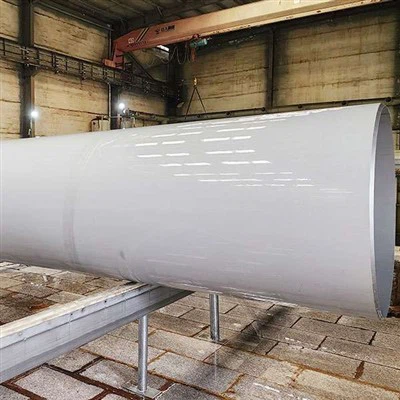
Hey there! As a supplier of Incoloy alloys, I've had the privilege of diving deep into the world of these remarkable materials. One question that often pops up is, "What is the pitting corrosion resistance of Incoloy?" Well, let's break it down and find out.

First off, let's understand what pitting corrosion is. It's a form of localized corrosion that results in the formation of small holes or pits on the surface of a metal. This can be a real headache because these pits can penetrate deep into the material, weakening it and potentially leading to failure. And when it comes to materials used in harsh environments, like chemical processing plants, oil and gas refineries, or marine applications, pitting corrosion resistance is a big deal.
So, how does Incoloy stack up? Incoloy is a family of nickel - iron - chromium superalloys known for their excellent corrosion resistance, high - temperature strength, and good fabricability. Different grades of Incoloy have different compositions, and these compositions play a crucial role in determining their pitting corrosion resistance.
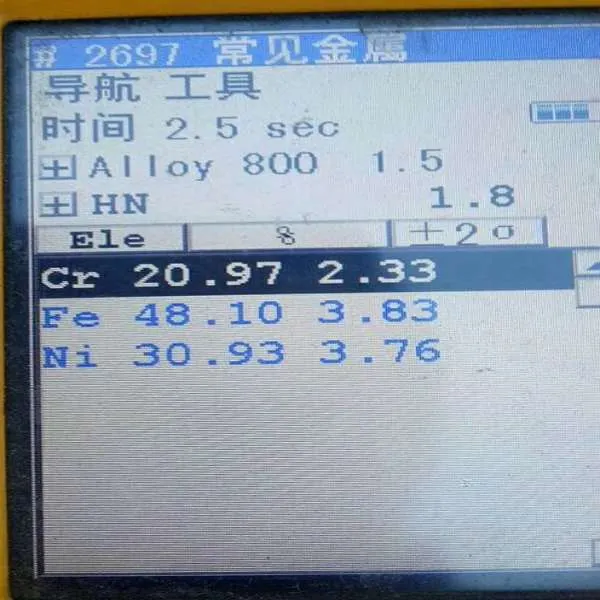
Let's take a look at some popular Incoloy grades. There's Incoloy 800 / UNS N08800 / 1.4876. This grade contains around 32 - 38% nickel, 19 - 23% chromium, and the rest is mainly iron. The chromium in Incoloy 800 forms a passive oxide layer on the surface of the alloy. This layer acts as a barrier, protecting the underlying metal from corrosive agents. The nickel content also enhances the alloy's resistance to a wide range of corrosive environments, including acids and alkalis. In many cases, Incoloy 800 shows good resistance to pitting corrosion in mildly corrosive environments, such as in some aqueous solutions with low chloride concentrations.
Then we have Incoloy 800H / UNS N08810 / 1.4958. It's similar to Incoloy 800 but with a more controlled carbon and aluminum content, which gives it better high - temperature properties. In terms of pitting corrosion resistance, it's quite comparable to Incoloy 800 in normal service conditions. However, its performance can be even better in high - temperature applications where the stability of the passive oxide layer is crucial. The alloy maintains its integrity and resists pitting even when exposed to elevated temperatures for extended periods.
Another well - known grade is Incoloy 800HT / UNS N08811 / 1.4959. It's also a high - temperature variant of Incoloy 800. The carefully balanced composition of Incoloy 800HT provides excellent resistance to oxidation and carburization at high temperatures. When it comes to pitting corrosion, it has a strong ability to withstand corrosive attack in environments where there are moderate levels of chlorides. The chromium and nickel in the alloy work together to form a stable and protective oxide film that prevents the initiation and propagation of pits.
But what factors can affect the pitting corrosion resistance of Incoloy? Well, the environment is a major one. Chloride ions are one of the most common culprits for pitting corrosion. High concentrations of chlorides, like in seawater or some chemical solutions, can break down the passive oxide layer on the surface of the Incoloy alloy, making it more susceptible to pitting. Temperature also plays a role. Higher temperatures can increase the rate of chemical reactions, which can either enhance the formation of the protective oxide layer or accelerate the breakdown of it, depending on the specific conditions.
The surface finish of the Incoloy material is another factor. A smooth surface finish can reduce the likelihood of pit initiation because there are fewer sites for corrosive agents to attack. On the other hand, a rough surface with scratches or defects can act as nucleation sites for pits.
So, if you're in an industry where pitting corrosion is a concern, Incoloy could be a great choice. But it's important to select the right grade based on your specific application. For example, if you're working in a high - temperature and moderately corrosive environment, Incoloy 800HT might be the way to go. If you're dealing with a less harsh environment at lower temperatures, Incoloy 800 could be sufficient.
As a supplier, I've seen firsthand how Incoloy alloys have solved corrosion problems for many of our customers. We offer a wide range of Incoloy products, from sheets and plates to bars and pipes. And we're always ready to help you choose the right grade for your needs. Whether you're a small - scale manufacturer or a large industrial company, we can provide you with high - quality Incoloy materials that meet your specifications.
If you're interested in learning more about Incoloy or want to discuss your specific requirements, don't hesitate to reach out. We're here to assist you with all your Incoloy - related questions and help you make the best decision for your project. Let's work together to find the perfect Incoloy solution for your corrosion - resistant needs.
References:
- ASM Handbook Volume 13A: Corrosion: Fundamentals, Testing, and Protection
- Nickel Institute Publications on Nickel - based Alloys