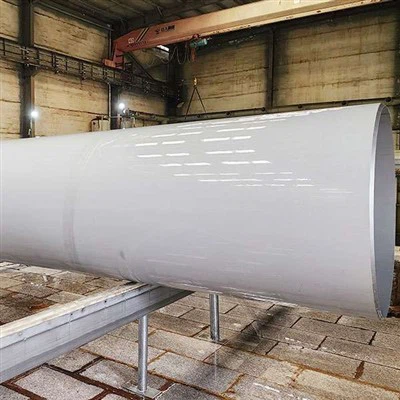
Hey there! As a supplier of duplex steel, I've been getting a lot of questions lately about the mechanical properties of this amazing material. So, I thought I'd take a few minutes to break it down for you.
First off, let's talk about what duplex steel is. Duplex steel is a type of stainless steel that has a two-phase microstructure, consisting of both ferrite and austenite. This unique combination gives duplex steel some pretty impressive mechanical properties that make it a popular choice in a variety of industries.
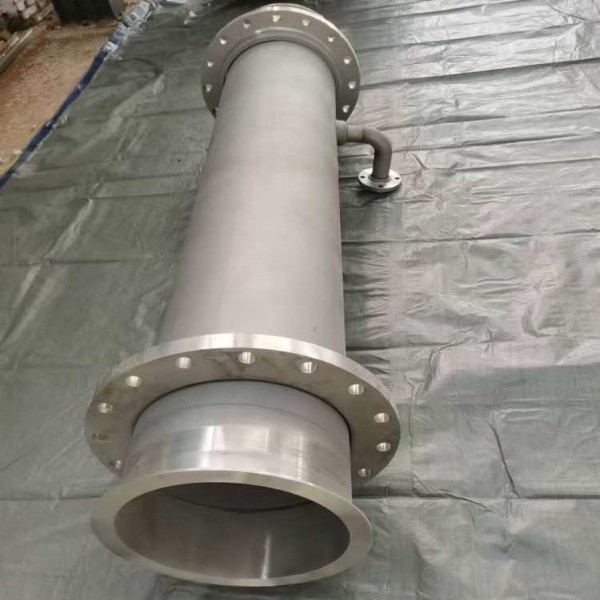
One of the key mechanical properties of duplex steel is its high strength. Compared to traditional austenitic stainless steels, duplex steel has a much higher yield strength and tensile strength. This means that it can withstand greater loads and stresses without deforming or breaking. For example, the yield strength of Duplex S31803 / F51 / 1.4462 Duplex S31803 / F51 / 1.4462 is typically around 450 MPa, while the yield strength of a typical austenitic stainless steel like 304 is only around 205 MPa. That's more than twice the strength!
Another important mechanical property of duplex steel is its excellent corrosion resistance. Duplex steel contains a high percentage of chromium, nickel, and molybdenum, which are all elements that are known for their corrosion-resistant properties. This makes duplex steel highly resistant to a wide range of corrosive environments, including chloride-containing solutions, acids, and alkalis. In fact, duplex steel is often used in applications where traditional stainless steels would quickly corrode, such as in the chemical processing, oil and gas, and marine industries.
In addition to its high strength and corrosion resistance, duplex steel also has good ductility and toughness. Ductility refers to the ability of a material to deform plastically without breaking, while toughness refers to the ability of a material to absorb energy and resist fracture. Duplex steel has both of these properties in spades, which makes it a great choice for applications where the material needs to be able to withstand impact and deformation.
One of the unique features of duplex steel is its ability to maintain its mechanical properties at both high and low temperatures. Unlike some other materials, duplex steel does not become brittle at low temperatures or lose its strength at high temperatures. This makes it a great choice for applications where the material needs to be able to perform in extreme temperature environments, such as in cryogenic storage tanks or high-temperature chemical reactors.
Now, let's talk about some of the specific mechanical properties of two popular grades of duplex steel: Duplex S31803 / F51 / 1.4462 and Duplex S32205 / F60 Duplex S32205 / F60.
Duplex S31803 / F51 / 1.4462 is a standard grade of duplex steel that is widely used in a variety of applications. It has a yield strength of around 450 MPa, a tensile strength of around 620 MPa, and an elongation of around 25%. It also has excellent corrosion resistance in a wide range of environments, including chloride-containing solutions, acids, and alkalis.
Duplex S32205 / F60 is a higher-grade duplex steel that has even better mechanical properties than Duplex S31803 / F51 / 1.4462. It has a yield strength of around 550 MPa, a tensile strength of around 700 MPa, and an elongation of around 25%. It also has excellent corrosion resistance in a wide range of environments, including chloride-containing solutions, acids, and alkalis.

So, there you have it! Those are some of the key mechanical properties of duplex steel. As you can see, duplex steel is a truly amazing material that offers a unique combination of high strength, excellent corrosion resistance, good ductility and toughness, and the ability to maintain its mechanical properties at both high and low temperatures.
If you're in the market for duplex steel, I'd love to hear from you. Whether you're looking for a specific grade of duplex steel or need help selecting the right material for your application, I'm here to help. Just reach out to me, and we can start a conversation about your needs.
References
- ASM Handbook, Volume 13A: Corrosion: Fundamentals, Testing, and Protection
- Stainless Steel World Magazine
- Duplex Stainless Steel Handbook