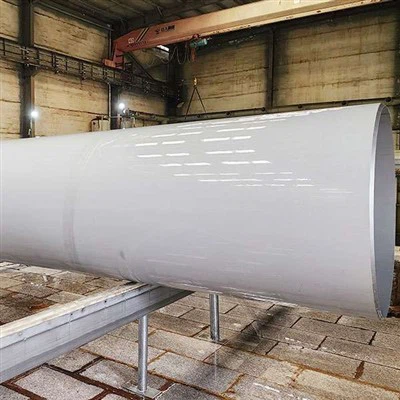
UNS S31603, also known as 316L stainless steel, is a popular austenitic stainless steel alloy widely used in various industries due to its excellent corrosion resistance, good mechanical properties, and weldability. As a supplier of UNS S31603, I often receive inquiries about its maximum service temperature. In this blog post, I will delve into the factors that influence the maximum service temperature of UNS S31603 and provide some practical guidelines for its use in high-temperature applications.
Understanding UNS S31603
Before discussing the maximum service temperature, it's essential to understand the composition and properties of UNS S31603. This alloy contains approximately 16-18% chromium, 10-14% nickel, and 2-3% molybdenum, which gives it superior corrosion resistance compared to other stainless steel grades, especially in chloride-rich environments. The low carbon content (less than 0.03%) helps prevent sensitization and intergranular corrosion during welding and high-temperature exposure.
Factors Affecting the Maximum Service Temperature
The maximum service temperature of UNS S31603 is influenced by several factors, including:
- Oxidation Resistance: At high temperatures, the chromium in the alloy forms a protective oxide layer on the surface, which helps prevent further oxidation and corrosion. However, this oxide layer can break down at very high temperatures, leading to accelerated oxidation and loss of material.
- Creep Resistance: Creep is the gradual deformation of a material under a constant load at high temperatures. UNS S31603 has relatively good creep resistance, but its performance can be affected by factors such as temperature, stress, and time.
- Mechanical Properties: The strength and ductility of UNS S31603 decrease with increasing temperature. At very high temperatures, the alloy may become brittle and prone to cracking.
- Environment: The presence of corrosive agents, such as sulfur, chlorine, and oxygen, can significantly reduce the maximum service temperature of UNS S31603. In some cases, the alloy may require additional protection, such as coatings or linings, to prevent corrosion.
Maximum Service Temperature Guidelines
Based on the above factors, the maximum service temperature of UNS S31603 is typically recommended to be around 870°C (1600°F) in continuous service and 925°C (1700°F) in intermittent service. However, these values are general guidelines and may vary depending on the specific application and operating conditions.
In applications where oxidation resistance is the primary concern, such as in furnace components and heat exchangers, the maximum service temperature can be increased to around 980°C (1800°F) if the alloy is properly protected from the environment. In applications where creep resistance is critical, such as in pressure vessels and piping systems, the maximum service temperature may need to be lower to ensure long-term reliability.


It's important to note that the maximum service temperature of UNS S31603 can also be affected by the thickness of the material. Thicker sections may have a lower maximum service temperature due to the increased risk of internal oxidation and stress cracking.
Comparison with Other Stainless Steel Grades
To provide a better understanding of the maximum service temperature of UNS S31603, let's compare it with some other popular stainless steel grades:
- Stainless Steel 17-4PH / UNS S17400 / 1.4542: This precipitation-hardened stainless steel has excellent strength and corrosion resistance, but its maximum service temperature is typically limited to around 315°C (600°F) due to its relatively low oxidation resistance.
- Stainless Steel AL6XN / UNS N08367 / 1.4529: This high-alloy stainless steel is specifically designed for use in highly corrosive environments, such as seawater and chemical processing. It has excellent oxidation and corrosion resistance and can be used at temperatures up to 650°C (1200°F).
- Stainless Steel 310S / UNS S31008 / 1.4845: This austenitic stainless steel has a high chromium and nickel content, which gives it excellent oxidation resistance and high-temperature strength. It can be used at temperatures up to 1150°C (2100°F) in continuous service and 1200°C (2200°F) in intermittent service.
Practical Considerations for High-Temperature Applications
When using UNS S31603 in high-temperature applications, it's important to consider the following practical aspects:
- Material Selection: Ensure that the selected grade of UNS S31603 is suitable for the specific application and operating conditions. Consider factors such as temperature, corrosion resistance, and mechanical properties.
- Design and Fabrication: Proper design and fabrication techniques are essential to ensure the long-term performance of UNS S31603 in high-temperature applications. Avoid sharp corners, notches, and other stress concentrators that can lead to cracking. Use appropriate welding and heat treatment processes to minimize the risk of sensitization and intergranular corrosion.
- Inspection and Maintenance: Regular inspection and maintenance are necessary to detect and prevent any potential issues with the UNS S31603 components. Monitor the temperature, pressure, and corrosion rate of the system and perform necessary repairs or replacements as needed.
- Safety Precautions: When working with UNS S31603 at high temperatures, it's important to follow all safety precautions to prevent accidents and injuries. Wear appropriate protective clothing, gloves, and eyewear, and use proper ventilation to avoid exposure to harmful fumes and gases.
Conclusion
In conclusion, the maximum service temperature of UNS S31603 is influenced by several factors, including oxidation resistance, creep resistance, mechanical properties, and environment. Based on general guidelines, the maximum service temperature is typically around 870°C (1600°F) in continuous service and 925°C (1700°F) in intermittent service. However, these values may vary depending on the specific application and operating conditions.
As a supplier of UNS S31603, I can provide you with high-quality materials and technical support to help you select the right grade and ensure the proper use of UNS S31603 in your high-temperature applications. If you have any questions or need further information, please feel free to contact me for a detailed discussion and potential procurement. I am here to assist you in finding the best solutions for your specific needs.
References
- ASM Handbook, Volume 13A: Corrosion: Fundamentals, Testing, and Protection
- Stainless Steel World Handbook
- American Society of Mechanical Engineers (ASME) Boiler and Pressure Vessel Code