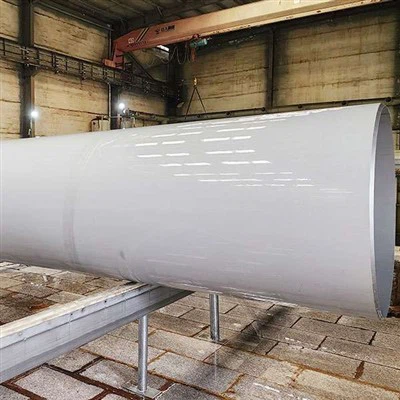
As a supplier of UNS S31008, I often receive inquiries from customers regarding the maximum operating temperature of this stainless - steel alloy. Understanding the thermal capabilities of UNS S31008 is crucial for its proper application in various industries, such as aerospace, chemical processing, and power generation. In this blog post, I will delve into the factors that determine the maximum operating temperature of UNS S31008 and discuss its performance under high - temperature conditions.
Overview of UNS S31008
UNS S31008, also known as Stainless Steel 310S / UNS S31008 / 1.4845 Stainless Steel 310S / UNS S31008 / 1.4845, is an austenitic stainless steel alloy. It is characterized by its high chromium (Cr) and nickel (Ni) content, typically around 24 - 26% chromium and 19 - 22% nickel. These alloying elements contribute to its excellent corrosion resistance and high - temperature stability. The addition of small amounts of carbon (C) and other trace elements further enhances its mechanical properties.
Factors Affecting the Maximum Operating Temperature
Oxidation Resistance
One of the primary factors determining the maximum operating temperature of UNS S31008 is its oxidation resistance. At high temperatures, metals react with oxygen in the air to form oxide layers. For UNS S31008, the high chromium content promotes the formation of a stable chromium oxide (Cr₂O₃) layer on the surface. This oxide layer acts as a protective barrier, preventing further oxidation of the underlying metal.
The rate of oxidation increases with temperature. As the temperature rises, the diffusion of oxygen through the oxide layer becomes faster, and the oxide layer may start to spall or crack. The maximum operating temperature is often defined as the temperature at which the oxidation rate becomes unacceptable for the intended application. For UNS S31008, it can typically withstand continuous exposure to temperatures up to about 1150°C (2100°F) in oxidizing atmospheres without significant oxidation damage.
Creep Resistance
Creep is the slow, continuous deformation of a material under a constant load at high temperatures. In applications where UNS S31008 is subjected to mechanical stresses at elevated temperatures, such as in furnace components or exhaust systems, creep resistance is a critical property.
The austenitic structure of UNS S31008 provides good creep resistance. The alloying elements, especially nickel, help to strengthen the crystal lattice and impede the movement of dislocations, which are responsible for creep deformation. However, as the temperature increases, the creep rate also increases. The maximum operating temperature for applications with significant mechanical loads is usually lower than the temperature based on oxidation resistance alone. In general, for long - term service under load, the maximum operating temperature is around 980°C (1800°F).
Thermal Stability
Thermal stability refers to the ability of the material to maintain its mechanical and chemical properties over a wide range of temperatures. At high temperatures, some stainless steels may undergo phase transformations, which can lead to a decrease in strength and corrosion resistance.
UNS S31008 has good thermal stability due to its austenitic structure. However, at very high temperatures, there is a risk of carbide precipitation along the grain boundaries. This can lead to sensitization, which reduces the corrosion resistance of the material. To avoid this, the maximum operating temperature for applications where corrosion resistance is crucial should be carefully controlled.
Comparison with Other Stainless Steel Alloys
It is useful to compare UNS S31008 with other stainless steel alloys to understand its performance in high - temperature applications. For example, Stainless Steel 321H / UNS S32109 / 1.4878 Stainless Steel 321H / UNS S32109 / 1.4878 is another austenitic stainless steel alloy. It contains titanium (Ti), which helps to stabilize the carbon and prevent carbide precipitation at high temperatures.
While Stainless Steel 321H has good high - temperature properties, its oxidation resistance is not as good as that of UNS S31008. Stainless Steel 321H is typically used in applications where the temperature is in the range of 800 - 900°C (1470 - 1650°F).
On the other hand, Stainless Steel 316 / UNS S31600 / 1.4401 Stainless Steel 316 / UNS S31600 / 1.4401 is a more common austenitic stainless steel alloy. It has lower chromium and nickel content compared to UNS S31008. As a result, its oxidation and high - temperature resistance are significantly lower. Stainless Steel 316 is usually limited to applications with temperatures up to about 750°C (1380°F).
Applications and Maximum Operating Temperature
The maximum operating temperature of UNS S31008 varies depending on the specific application. In furnace construction, where the material is mainly exposed to high - temperature air and minimal mechanical stress, it can be used at temperatures close to its oxidation - limited maximum of 1150°C (2100°F). For example, furnace linings, radiant tubes, and burner parts can be made of UNS S31008.
In the chemical processing industry, where UNS S31008 may be exposed to corrosive chemicals at high temperatures, the maximum operating temperature is often lower. This is because the combination of high temperature and corrosive environments can accelerate the degradation of the material. In such applications, the temperature may be limited to around 900 - 1000°C (1650 - 1830°F).
In the power generation industry, especially in boiler components and exhaust systems, the material is subjected to both high temperatures and mechanical stresses. The maximum operating temperature is typically around 980°C (1800°F) to ensure long - term reliability and performance.
Conclusion
In conclusion, the maximum operating temperature of UNS S31008 depends on several factors, including oxidation resistance, creep resistance, and thermal stability. For applications with minimal mechanical stress and in oxidizing atmospheres, it can withstand temperatures up to about 1150°C (2100°F). However, for applications with significant mechanical loads or in corrosive environments, the maximum operating temperature is lower, usually around 900 - 980°C (1650 - 1800°F).


As a supplier of UNS S31008, I understand the importance of providing high - quality materials that meet the specific requirements of each application. If you are considering using UNS S31008 in your project, I encourage you to contact me for more detailed information and to discuss your specific needs. We can work together to ensure that you select the right material and that it is used within its appropriate temperature range for optimal performance and longevity.
References
- ASM Handbook, Volume 13A: Corrosion: Fundamentals, Testing, and Protection.
- Stainless Steel Handbook, edited by L. L. Shreir.
- Technical literature from stainless steel manufacturers.