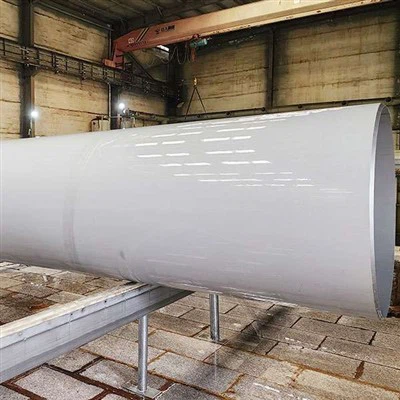
What is the hardness of Incoloy? Well, let me break it down for you as an Incoloy supplier. Incoloy is a group of nickel - iron - chromium - based superalloys that offer outstanding corrosion resistance, high - temperature strength, and other excellent properties. Hardness is a crucial factor when it comes to the usability and performance of these alloys.
First off, it's important to understand that the hardness of Incoloy can vary depending on different factors. The composition of the specific Incoloy alloy plays a huge part. For example, we have some popular Incoloy grades like Incoloy 800HT / UNS N08811 / 1.4959, Incoloy 825 / UNS N08825 / 2.4858, and Incoloy 800H / UNS N08810 / 1.4958. Each of these has a unique mix of elements that affects their hardness.
Incoloy 800HT is known for its high - temperature performance. Its hardness is often optimized to withstand the rigors of elevated - temperature environments. It has a good balance of strength and ductility, which means it can handle a decent amount of stress without cracking easily. The hardness typically falls within a certain range that makes it suitable for applications like furnace components, heat exchangers, and power generation equipment. In heat - treated conditions, the hardness of Incoloy 800HT can be adjusted to meet specific customer requirements. For example, after annealing at the right temperature and time, its hardness can reach a level where it can resist wear and deformation under high - heat conditions.


Now, let's talk about Incoloy 825. This alloy is particularly great for applications in corrosive environments. Its nickel, chromium, and molybdenum content contribute to not only its corrosion - resistant properties but also its hardness. The molybdenum adds a bit of extra strength and hardness, making it a top choice for things like chemical processing equipment, oil and gas pipelines, and marine applications. In general, Incoloy 825 has a relatively good hardness that allows it to maintain its shape and integrity in the face of corrosive agents and mechanical stress. If you're in an industry where there's a lot of exposure to chemicals or saltwater, this alloy's hardness can really work to your advantage.
Incoloy 800H is another popular grade. It is similar to Incoloy 800HT but with some slightly different composition and performance characteristics. In terms of hardness, it also offers a good level of durability for high - temperature applications. It can be used in a wide range of industries, from aerospace to automotive. The hardness of Incoloy 800H helps it endure the high - temperature and high - stress conditions often found in these fields. Just like the other Incoloy grades, its hardness can be fine - tuned through heat treatment and other manufacturing processes.
The hardness of Incoloy alloys is also affected by the manufacturing process. Things like forging, rolling, and heat treatment can all have a significant impact. For example, forging can align the grain structure of the alloy, which can increase its hardness and strength. Heat treatment, on the other hand, can either soften the alloy for easier machining or harden it for better wear and corrosion resistance. Annealing, quenching, and tempering are some of the common heat - treatment methods used to adjust the hardness of Incoloy.
When it comes to measuring the hardness of Incoloy, there are several methods. The Rockwell hardness test is one of the most common. It measures the depth of penetration of an indenter into the material under a specific load. Another method is the Brinell hardness test, which uses a hard ball as the indenter and measures the diameter of the indentation left on the surface. The Vickers hardness test is also widely used, especially for more precise measurements. It uses a diamond - shaped indenter and measures the diagonal length of the indentation. Each of these tests provides a different way of quantifying the hardness, and depending on the application and requirements, different tests may be more appropriate.
So, why does the hardness of Incoloy matter in your applications? Well, if you're using Incoloy for a high - stress component, like a turbine blade in an engine, you need it to have the right hardness to resist deformation and wear. If it's not hard enough, it could break down over time, leading to equipment failure and costly repairs. On the other hand, if it's too hard, it might become brittle and also prone to cracking. So, it's all about finding that sweet spot of the right hardness for your specific needs.
As an Incoloy supplier, I've seen firsthand how important it is to get the hardness right. We work with our customers to understand their applications and requirements, and then we can provide the most suitable Incoloy alloy with the proper hardness. Whether you need Incoloy 800HT for your high - temperature furnace, Incoloy 825 for your chemical - processing plant, or Incoloy 800H for your aerospace project, we've got you covered.
If you're in the market for Incoloy and want to discuss the hardness requirements for your projects, don't hesitate to reach out. We're here to offer expert advice, provide high - quality Incoloy products, and ensure that you get the best solution for your business. Let's work together to find the perfect Incoloy alloy with the right hardness for your specific needs.
References:
- Materials Science textbooks on superalloys
- Industry reports on Incoloy applications and properties
- Technical data sheets provided by alloy manufacturers