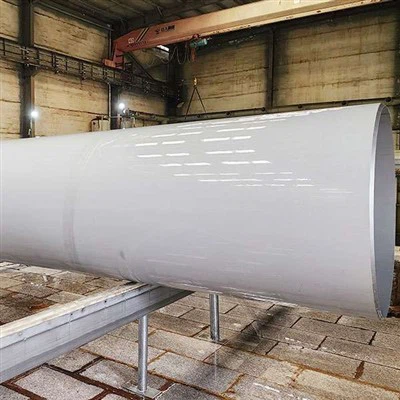
As a supplier of UNS 31609, I am often asked about the fatigue strength of this particular stainless - steel alloy. Understanding the fatigue strength of UNS 31609 is crucial for applications where the material will be subjected to cyclic loading. In this blog, we will delve into what fatigue strength is, how it pertains to UNS 31609, and the factors that can influence it.
What is Fatigue Strength?
Fatigue strength refers to the maximum stress that a material can withstand for a specified number of cycles without failing. When a material is under cyclic loading, such as repeated bending, torsion, or tension - compression, microscopic cracks can initiate and grow over time. Eventually, these cracks can lead to catastrophic failure, even if the applied stress is well below the material's ultimate tensile strength.
The fatigue strength is typically determined through fatigue testing. In a fatigue test, a sample of the material is subjected to a cyclic load, and the number of cycles it can endure before failure is recorded. The results are then plotted on an S - N curve, where S represents the stress amplitude and N represents the number of cycles to failure.
Fatigue Strength of UNS 31609
UNS 31609 is a high - temperature version of the popular 316 stainless steel. It contains higher carbon content than standard 316 stainless steel, which enhances its strength at elevated temperatures. The fatigue strength of UNS 31609 is influenced by several factors, including its chemical composition, heat treatment, and the environment in which it operates.
In general, the fatigue strength of UNS 31609 is relatively high compared to some other stainless - steel alloys. Its austenitic structure provides good ductility and toughness, which helps to resist crack initiation and propagation under cyclic loading. However, the fatigue strength can vary depending on the specific application and the conditions of use.
For example, at room temperature, UNS 31609 may have a fatigue strength in the range of 200 - 300 MPa for a large number of cycles (e.g., 10^7 cycles). But as the temperature increases, the fatigue strength can decrease. At elevated temperatures, the material's microstructure can change, and creep and oxidation can also affect its fatigue performance.
Factors Influencing the Fatigue Strength of UNS 31609
Chemical Composition
The chemical composition of UNS 31609 plays a significant role in its fatigue strength. The higher carbon content, compared to standard 316 stainless steel, increases the strength of the alloy, especially at elevated temperatures. Chromium and nickel are also important elements in UNS 31609. Chromium provides corrosion resistance and forms a protective oxide layer on the surface of the material, while nickel enhances the alloy's ductility and toughness.
Molybdenum is another key element in UNS 31609. It improves the alloy's resistance to pitting and crevice corrosion, which can be particularly important in applications where the material is exposed to corrosive environments. A proper balance of these elements is essential for achieving optimal fatigue strength.
Heat Treatment
Heat treatment can have a profound impact on the fatigue strength of UNS 31609. Annealing, for example, can relieve internal stresses in the material and improve its ductility. However, improper heat treatment can lead to the formation of undesirable phases in the microstructure, which can reduce the fatigue strength.


Solution annealing is a common heat - treatment process for UNS 31609. It involves heating the material to a high temperature (usually around 1050 - 1100°C) and then rapidly cooling it. This process helps to dissolve any precipitates in the microstructure and ensures a homogeneous austenitic structure, which is beneficial for fatigue resistance.
Surface Finish
The surface finish of UNS 31609 can also affect its fatigue strength. A smooth surface finish can reduce the stress concentration at the surface, which in turn can decrease the likelihood of crack initiation. On the other hand, a rough or damaged surface can act as a stress raiser, increasing the risk of fatigue failure.
Surface treatments such as polishing or shot peening can be used to improve the surface finish and enhance the fatigue strength. Shot peening, in particular, can introduce compressive stresses on the surface of the material, which can help to resist crack propagation.
Environment
The environment in which UNS 31609 operates can have a significant impact on its fatigue strength. Corrosive environments, such as those containing chloride ions, can cause pitting and crevice corrosion, which can initiate cracks and reduce the fatigue life of the material.
High - temperature environments can also affect the fatigue strength of UNS 31609. At elevated temperatures, the material can experience creep, which is the slow deformation of the material under a constant load over time. Creep can interact with fatigue, leading to accelerated crack growth and reduced fatigue life.
Comparison with Other Stainless - Steel Alloys
When considering the fatigue strength of UNS 31609, it can be useful to compare it with other stainless - steel alloys. For instance, Stainless Steel 321H / UNS S32109 / 1.4878 is another high - temperature stainless - steel alloy. It contains titanium, which stabilizes the carbon in the alloy and reduces the risk of carbide precipitation at elevated temperatures.
In some applications, Stainless Steel 321H may have a similar fatigue strength to UNS 31609 at room temperature. However, at very high temperatures, the titanium in 321H can provide better resistance to creep and oxidation, which may result in a longer fatigue life compared to UNS 31609.
Stainless Steel 316LN / UNS S31653 / 1.4406, 1.4429 is a low - carbon version of 316 stainless steel with nitrogen addition. The low carbon content reduces the risk of sensitization, which can improve the corrosion resistance and potentially the fatigue strength in corrosive environments.
Stainless Steel 347 / UNS S34700 / 1.4550 contains niobium, which stabilizes the carbon in the alloy. Similar to 321H, it has good resistance to carbide precipitation at elevated temperatures. In terms of fatigue strength, 347 may have comparable performance to UNS 31609 in some applications, but the specific performance will depend on the operating conditions.
Applications of UNS 31609 Based on Fatigue Strength
UNS 31609 is commonly used in applications where high - temperature strength and good fatigue resistance are required. Some of these applications include:
- Power Generation: In power plants, UNS 31609 can be used in components such as boiler tubes, superheaters, and reheaters. These components are subjected to cyclic thermal and mechanical loads, and the high fatigue strength of UNS 31609 helps to ensure their long - term reliability.
- Chemical Processing: In the chemical industry, UNS 31609 is used in equipment that is exposed to high - temperature and corrosive environments. For example, it can be used in reaction vessels, heat exchangers, and piping systems. The combination of good corrosion resistance and fatigue strength makes it suitable for these demanding applications.
- Aerospace: In the aerospace industry, UNS 31609 may be used in components such as engine parts and exhaust systems. These components are subjected to high - speed cyclic loading and elevated temperatures, and the fatigue strength of UNS 31609 is crucial for ensuring the safety and performance of the aircraft.
Conclusion
The fatigue strength of UNS 31609 is an important property that depends on several factors, including its chemical composition, heat treatment, surface finish, and the operating environment. As a supplier of UNS 31609, we understand the importance of providing high - quality material that meets the specific requirements of our customers.
If you are considering using UNS 31609 in your application, it is essential to carefully evaluate its fatigue strength and how it will perform under your specific operating conditions. Our team of experts is available to assist you in selecting the right material and providing technical support. Whether you need help with material selection, heat treatment, or surface finishing, we are here to ensure that you get the best performance from your UNS 31609 components.
If you are interested in purchasing UNS 31609 or would like to discuss your specific requirements, please feel free to contact us. We look forward to working with you to meet your material needs.
References
- ASM Handbook, Volume 1: Properties and Selection: Irons, Steels, and High - Performance Alloys.
- Stainless Steel Handbook, Nickel Institute.
- Fatigue of Materials, Third Edition by Norman E. Dowling.