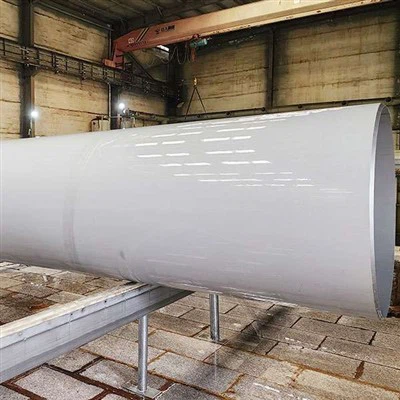
Hey there! As a duplex steel supplier, I often get asked about the density of duplex steel. So, I thought I'd write this blog to shed some light on this topic.
First off, let's understand what duplex steel is. Duplex steel is a type of stainless steel that has a two - phase microstructure, consisting of both austenite and ferrite. This unique structure gives it a combination of properties from both phases, like high strength, good corrosion resistance, and excellent weldability.
Now, getting to the main question: what's the density of duplex steel? Well, the density of duplex steel can vary depending on its exact composition. Generally, the density of duplex steel is around 7.8 g/cm³. But this is just an approximate value. Different grades of duplex steel might have slightly different densities due to variations in the amounts of elements like chromium, nickel, molybdenum, and nitrogen they contain.
Let's take a look at some common grades of duplex steel. One of the well - known grades is Duplex S31803 / F51 / 1.4462. This grade is widely used in various industries because of its good balance of properties. The density of Duplex S31803 is typically close to the general value of 7.8 g/cm³. It has a relatively high chromium content (around 22%), along with some nickel and molybdenum. These elements contribute to its corrosion resistance and mechanical properties, but they also have an impact on its density.
Another popular grade is Duplex S32205 / F60. Duplex S32205 has a slightly different chemical composition compared to S31803. It has a bit more nickel and molybdenum, which can lead to a slightly different density. However, it's still in the ballpark of 7.8 g/cm³. This grade is often used in more demanding applications where higher corrosion resistance and strength are required, such as in the oil and gas industry or in marine environments.
Why does the density of duplex steel matter? Well, for one thing, it's important in design and engineering. When you're designing a structure or a component using duplex steel, you need to know its density to calculate things like weight, load - bearing capacity, and shipping costs. For example, if you're building an offshore platform using duplex steel pipes, knowing the density helps you figure out how much the pipes will weigh and how they'll affect the overall stability of the platform.
In manufacturing, density also plays a role. When melting and casting duplex steel, the density affects the volume and mass relationships. It helps manufacturers ensure that they're using the right amount of raw materials and that the final product has the desired dimensions and properties.
Now, I know you might be wondering how we measure the density of duplex steel. There are a few methods. One common way is the Archimedes' principle. You take a sample of the duplex steel, measure its mass in air, and then measure its apparent mass when it's submerged in a liquid (usually water). By using the difference in these masses and the density of the liquid, you can calculate the density of the steel sample.
Another method is using advanced techniques like X - ray fluorescence (XRF) to analyze the chemical composition of the steel. Once you know the composition, you can use theoretical models to estimate the density based on the known densities of the individual elements and their proportions in the alloy.
As a duplex steel supplier, I've seen firsthand how important it is for our customers to have accurate information about the density of the steel they're buying. That's why we make sure to provide detailed technical data sheets for all our products. These data sheets include information about the density, as well as other important properties like mechanical strength, corrosion resistance, and chemical composition.
If you're in the market for duplex steel, whether it's for a small project or a large - scale industrial application, I'd love to help. We have a wide range of duplex steel products in different grades and forms, such as plates, sheets, pipes, and bars. Our team of experts can assist you in choosing the right grade and product for your specific needs.
We understand that every project is unique, and we're committed to providing high - quality duplex steel at competitive prices. Whether you're an engineer, a contractor, or a manufacturer, we can work with you to ensure that you get the best value for your money. So, if you're interested in learning more about our duplex steel products or have any questions about density or other properties, don't hesitate to get in touch.
In conclusion, the density of duplex steel is an important property that can affect various aspects of design, manufacturing, and application. While the general density is around 7.8 g/cm³, it can vary slightly depending on the grade and composition. As a reliable duplex steel supplier, we're here to provide you with the information and products you need to make your project a success.
References

- ASM Handbook Volume 1: Properties and Selection: Irons, Steels, and High - Performance Alloys
- Duplex Stainless Steels: A Guide to Their Physical, Mechanical, and Corrosion - Resistant Properties