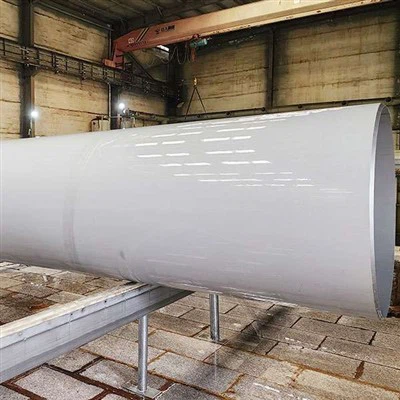
Yo, what's up everyone! As a supplier of UNS S30403, I've been getting a lot of questions lately about the seismic performance of structures made from this stainless - steel alloy. So, I thought I'd sit down and write this blog to share some insights.
First off, let's talk a bit about UNS S30403. It's a type of austenitic stainless steel, which is basically known for its great corrosion resistance and good formability. You might be wondering how this translates into seismic performance. Well, when an earthquake hits, structures need to be able to withstand a whole bunch of forces like shaking, twisting, and bending.
One of the key factors in seismic performance is ductility. Ductility means the ability of a material to deform without breaking. UNS S30403 has pretty decent ductility. This is super important because during an earthquake, the structure will experience large deformations. If the material isn't ductile enough, it'll just crack and fail. With UNS S30403, though, it can stretch and bend to a certain extent, absorbing the energy from the earthquake.
Another aspect is the strength of the material. UNS S30403 has good tensile strength. Tensile strength is the maximum amount of pulling force a material can take before it breaks. In an earthquake, there are often pulling and stretching forces acting on the structure. The high tensile strength of UNS S30403 helps the structure hold up under these forces.
Now, let's compare it with some other stainless - steel alloys. For example, Stainless Steel 310S / UNS S31008 / 1.4845. This alloy is known for its high - temperature resistance. While it's a great alloy in many applications, when it comes to seismic performance, UNS S30403 has an edge in terms of ductility. The 310S is more brittle compared to UNS S30403, which means it might not be able to handle the large deformations caused by an earthquake as well.
Then there's Stainless Steel 321 / UNS S32100 / 1.4541. This alloy has titanium added to it, which gives it good resistance to intergranular corrosion. But in terms of seismic performance, UNS S30403's combination of ductility and strength makes it a better choice for structures in seismic - prone areas.
And Stainless Steel 316LN / UNS S31653 / 1.4406, 1.4429 is well - known for its corrosion resistance in chloride - containing environments. However, when it comes to seismic events, UNS S30403's ability to absorb energy through deformation is a significant advantage.
In real - world applications, structures made from UNS S30403 have shown good performance during earthquakes. For instance, in some buildings in seismic - active regions, the use of UNS S30403 in structural components like beams and columns has helped the buildings stay intact. The material's ability to flex and absorb energy reduces the risk of sudden collapse.
But it's not just about the material itself. The design of the structure also plays a huge role. Engineers need to take into account the properties of UNS S30403 when designing a building or any other structure. They need to make sure that the structure is designed in a way that maximizes the benefits of the material's ductility and strength.


For example, proper bracing and connection details are crucial. If the connections between different structural elements are weak, even the best - performing material won't be able to save the structure. So, when using UNS S30403, engineers need to pay close attention to how the different parts of the structure are joined together.
Another thing to consider is the long - term performance of UNS S30403 in a seismic environment. Over time, repeated exposure to seismic forces can cause fatigue in the material. However, UNS S30403 has good fatigue resistance. This means that it can withstand many cycles of loading and unloading without developing cracks or losing its strength.
In addition to buildings, UNS S30403 can also be used in other types of structures like bridges. Bridges are especially vulnerable during earthquakes because they are long and flexible. The use of UNS S30403 in bridge components can help improve their seismic performance.
When it comes to cost - effectiveness, UNS S30403 is a great option. It offers good seismic performance at a relatively lower cost compared to some other high - end alloys. This makes it an attractive choice for large - scale construction projects in seismic - prone areas.
So, if you're involved in a construction project in an area where earthquakes are a concern, UNS S30403 could be the way to go. It combines good ductility, strength, and fatigue resistance, which are all essential for seismic performance.
If you're interested in learning more about UNS S30403 or are thinking about using it in your next project, don't hesitate to reach out. I'm here to answer any questions you might have and can provide you with high - quality UNS S30403 products. Let's have a chat and see how we can work together to make your project a success.
References:
- ASCE 7 - 16, Minimum Design Loads and Associated Criteria for Buildings and Other Structures
- ASTM A240/A240M - 20, Standard Specification for Chromium and Chromium - Nickel Stainless Steel Plate, Sheet, and Strip for Pressure Vessels and for General Applications