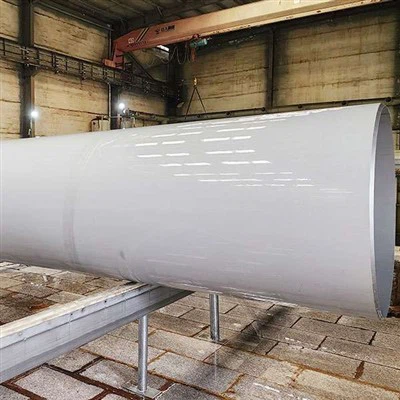
Safety is of paramount importance in the operation of nuclear power plants. Every material used in these facilities must meet rigorous standards to ensure the well - being of the plant, its workers, and the surrounding environment. As a supplier of UNS S30400, I am well - aware of the significance of this stainless steel alloy in nuclear power applications and the safety considerations associated with its use.
Understanding UNS S30400
UNS S30400, also known as Stainless Steel 304, is a widely used austenitic stainless steel. It contains approximately 18% chromium and 8% nickel, which gives it excellent corrosion resistance and good mechanical properties. You can find more detailed information about UNS S30400 on this page: Stainless Steel 304 / UNS S30400 / 1.4301.
Corrosion Resistance in Nuclear Environments
One of the primary safety considerations when using UNS S30400 in nuclear power plants is its corrosion resistance. Nuclear power plants operate in a highly corrosive environment due to the presence of high - temperature water, radiation, and various chemical agents. Corrosion can lead to the degradation of components, which may result in leaks, structural failures, and ultimately, safety hazards.
UNS S30400 has good general corrosion resistance in many nuclear - related environments. The chromium in the alloy forms a passive oxide layer on the surface, which protects the underlying metal from further corrosion. However, in some specific conditions, such as in the presence of chloride ions, it may be susceptible to pitting and crevice corrosion. For example, if there are small amounts of chloride in the coolant water, it can break down the passive layer and initiate corrosion at specific points on the surface of the UNS S30400 components.
To mitigate these risks, proper water chemistry control is essential. The operators of nuclear power plants need to monitor and adjust the chemical composition of the coolant water to maintain a low chloride concentration. Additionally, regular inspections of the UNS S30400 components are necessary to detect any signs of corrosion at an early stage.
Radiation Resistance
Another critical safety aspect is the radiation resistance of UNS S30400. Nuclear power plants are exposed to high levels of radiation, which can cause changes in the microstructure and mechanical properties of materials. Radiation can induce the formation of defects in the crystal lattice of the stainless steel, such as vacancies and interstitials, which may lead to hardening, embrittlement, and a decrease in ductility.
Over time, these radiation - induced changes can reduce the ability of the UNS S30400 components to withstand mechanical loads. For example, in the case of pipes or structural supports made of UNS S30400, embrittlement can increase the risk of cracking under stress, which could potentially lead to a loss of coolant accident.
To address these issues, extensive research has been conducted on the radiation - resistant properties of UNS S30400. Some studies have shown that the addition of certain alloying elements or the use of specific heat - treatment processes can improve its radiation resistance. However, continuous monitoring of the radiation - exposed components is still required to ensure their long - term integrity.
Compatibility with Other Materials
In a nuclear power plant, UNS S30400 is often used in combination with other materials. The compatibility between UNS S30400 and these other materials is an important safety consideration. Galvanic corrosion can occur when two different metals are in contact in an electrolyte, such as the coolant water in a nuclear power plant.
For example, if UNS S30400 is in contact with a more active metal, such as carbon steel, a galvanic cell can be formed. The less noble metal (carbon steel in this case) will act as the anode and corrode preferentially, while the UNS S30400 will act as the cathode. This can lead to accelerated corrosion of the carbon steel and potential damage to the overall system.
To prevent galvanic corrosion, proper material selection and design are crucial. Insulating materials can be used to separate different metals, or coatings can be applied to the surfaces of the metals to reduce the likelihood of galvanic coupling.
Weldability and Fabrication
The weldability of UNS S30400 is also a safety - related factor. Welding is a common fabrication method used in the construction of nuclear power plant components. However, improper welding can introduce defects in the weld joint, such as porosity, cracks, and lack of fusion. These defects can act as stress concentrators and reduce the strength and integrity of the component.
When welding UNS S30400, it is necessary to follow strict welding procedures. The welding parameters, such as welding current, voltage, and travel speed, need to be carefully controlled to ensure a high - quality weld. Additionally, post - weld heat treatment may be required to relieve residual stresses and improve the corrosion resistance of the weld joint.
Comparison with Other Stainless Steel Alloys
In nuclear power plant applications, other stainless steel alloys are also used, such as Stainless Steel 347H / UNS S34709 / 1.4961 and Stainless Steel 316 / UNS S31600 / 1.4401. Each alloy has its own advantages and disadvantages in terms of safety considerations.


Stainless Steel 347H contains niobium, which stabilizes the carbon in the alloy and reduces the risk of sensitization and intergranular corrosion. This makes it more suitable for high - temperature and long - term service in nuclear power plants. Stainless Steel 316 has a higher molybdenum content than UNS S30400, which gives it better resistance to pitting and crevice corrosion in chloride - containing environments.
When selecting the appropriate alloy for a specific application in a nuclear power plant, engineers need to consider factors such as the operating conditions, the required service life, and the cost.
Quality Control and Certification
As a supplier of UNS S30400, I understand the importance of quality control and certification. All the UNS S30400 products I supply are manufactured in accordance with strict quality standards. We conduct a series of tests, including chemical analysis, mechanical property testing, and non - destructive testing, to ensure that the products meet the requirements of nuclear power plant applications.
In addition, our products are certified by relevant international standards organizations. This certification provides assurance to the customers that the UNS S30400 they purchase meets the necessary safety and quality criteria.
Conclusion and Call to Action
In conclusion, the use of UNS S30400 in nuclear power plants requires careful consideration of various safety factors, including corrosion resistance, radiation resistance, compatibility with other materials, weldability, and fabrication. By addressing these issues through proper design, material selection, water chemistry control, and regular inspections, the safety and reliability of nuclear power plants can be ensured.
If you are involved in the nuclear power industry and are looking for a reliable supplier of high - quality UNS S30400, please feel free to contact me for more information and to discuss your procurement needs. We are committed to providing you with the best products and services to meet your safety and performance requirements.
References
- ASM Handbook Volume 13A: Corrosion: Fundamentals, Testing, and Protection
- Nuclear Regulatory Commission (NRC) regulations on material selection in nuclear power plants
- Research papers on the behavior of stainless steels in nuclear environments published in journals such as "Journal of Nuclear Materials" and "Corrosion Science"