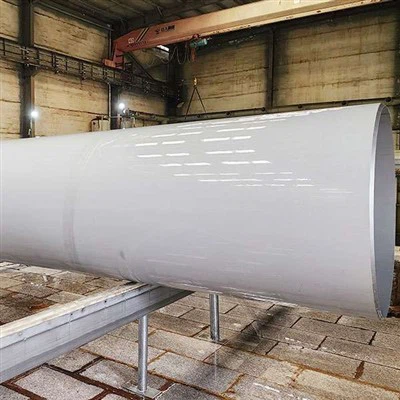
Hey there! As a supplier of UNS S32100, I'm stoked to chat with you about the quality control measures we take during its production. UNS S32100, also known as Stainless Steel 321, is a popular austenitic stainless steel with titanium addition. It's widely used in various industries because of its excellent corrosion resistance and high-temperature strength.
Let's start with the raw materials. We source our raw materials from trusted suppliers. Before they even enter our production facility, we conduct a thorough inspection. We check the chemical composition of the incoming materials. For UNS S32100, the key elements like chromium, nickel, and titanium have specific percentage ranges. We use advanced spectrometers to analyze these elements accurately. If the chemical composition doesn't meet our strict standards, we send the materials back. This initial check is super important as it sets the foundation for the quality of the final product.
Once the raw materials pass the inspection, they head to the melting stage. In the melting process, we use electric arc furnaces or induction furnaces. During melting, we closely monitor the temperature and the chemical reactions. We add alloying elements precisely to ensure the right balance of elements in the molten metal. For example, titanium is added to prevent carbide precipitation at high temperatures. We also use degassing techniques to remove impurities like oxygen and nitrogen from the molten metal. This helps to improve the purity and quality of the steel.
After melting, the next step is casting. We have two main casting methods: continuous casting and ingot casting. For continuous casting, we can produce long, uniform billets or slabs. We control the casting speed, temperature, and cooling rate very carefully. If the casting speed is too fast, it can lead to surface defects or internal cracks. On the other hand, if the cooling rate is not right, it can affect the grain structure of the steel. In ingot casting, we pay attention to the solidification process. We make sure the ingots cool evenly to avoid any internal stresses or segregation.
Once the cast products are formed, they go through a series of hot working processes. This includes hot rolling, forging, or extrusion. In hot rolling, we heat the cast products to a specific temperature range and then pass them through a series of rollers. The temperature and the reduction ratio are crucial. If the temperature is too low, the steel may not deform properly, and if it's too high, it can cause excessive grain growth. We constantly monitor the dimensions and the surface quality during hot working. Any products with visible defects like scratches, cracks, or uneven surfaces are removed from the production line.
After hot working, we move on to cold working if required. Cold working can improve the strength and hardness of the steel. We use processes like cold rolling, drawing, or cold forging. Similar to hot working, we closely monitor the process parameters. We also conduct regular inspections to check for any surface defects or changes in the mechanical properties.
Heat treatment is another vital step in the production of UNS S32100. We use solution annealing to dissolve any carbides and achieve a homogeneous microstructure. The temperature and the holding time during solution annealing are carefully controlled. After solution annealing, we quench the steel rapidly to retain the desired microstructure. This helps to improve the corrosion resistance and the mechanical properties of the steel.
Now, let's talk about the final inspection. We have a comprehensive final inspection process. First, we check the chemical composition again using the same advanced spectrometers. This double-check ensures that the chemical composition of the final product meets the required standards. We also conduct mechanical property tests. This includes tensile tests, hardness tests, and impact tests. Tensile tests help us determine the strength and ductility of the steel. Hardness tests give us an idea of the steel's resistance to indentation. Impact tests measure the steel's ability to absorb energy without fracturing.
In addition to mechanical property tests, we also perform non - destructive testing (NDT). We use methods like ultrasonic testing, magnetic particle testing, and radiographic testing. Ultrasonic testing can detect internal defects like cracks or voids. Magnetic particle testing is used to find surface and near - surface defects in ferromagnetic materials. Radiographic testing can provide detailed images of the internal structure of the steel. Any products that fail these tests are rejected.
We also pay attention to the surface finish of the UNS S32100 products. We use various finishing processes like grinding, polishing, or pickling. A good surface finish not only improves the appearance of the product but also enhances its corrosion resistance. We inspect the surface finish visually and using surface roughness measuring instruments.


As a supplier, we also keep detailed records of the entire production process. This includes the source of the raw materials, the process parameters at each stage, and the test results. These records help us to trace the quality of the products and to identify any potential issues. If there are any customer complaints, we can quickly refer to these records to find out what went wrong.
Now, if you're in the market for high - quality UNS S32100 products, you might also be interested in some related alloys. Check out Stainless Steel 347H / UNS S34709 / 1.4961, Stainless Steel 321H / UNS S32109 / 1.4878, and Stainless Steel 316Ti / UNS S31635 / 1.4571. These alloys have their own unique properties and applications.
If you're thinking about purchasing UNS S32100 products, I'd love to have a chat with you. We can discuss your specific requirements and how our quality control measures ensure that you get the best products. Don't hesitate to reach out for a procurement discussion.
References:
- ASM Handbook Volume 1: Properties and Selection: Irons, Steels, and High - Performance Alloys
- Corrosion Resistance of Stainless Steels by George S. Was