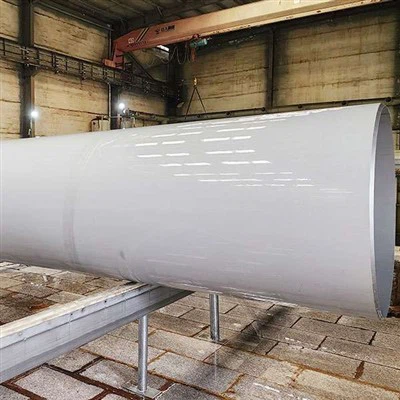
In the world of high - performance alloys, Inconel stands out as a material of choice for a wide range of applications due to its excellent corrosion resistance, high - temperature strength, and oxidation resistance. As a trusted Inconel supplier, we understand the critical importance of quality control during the production process. In this blog, we will delve into the various quality control measures implemented during Inconel production to ensure that our customers receive products of the highest quality.
Raw Material Inspection
The quality of Inconel products begins with the selection and inspection of raw materials. We source our raw materials from reputable suppliers and conduct thorough inspections upon receipt. Chemical composition analysis is one of the primary methods used to verify the quality of the raw materials. We use advanced analytical techniques such as spectroscopy to accurately determine the elemental composition of the incoming materials. This ensures that the raw materials meet the strict chemical composition requirements for specific Inconel grades, such as Inconel 601 / UNS N06601 / 2.4851, Inconel 718 / UNS N07718 / 2.4668, and Inconel 600 / UNS N06600 / 2.4816.
In addition to chemical composition analysis, we also perform physical inspections of the raw materials. This includes checking for surface defects, such as cracks, porosity, and inclusions. Any raw materials that do not meet our quality standards are rejected to prevent potential issues during the production process.
Melting and Refining
The melting and refining process is a crucial step in Inconel production. We use advanced melting techniques, such as vacuum induction melting (VIM) and electroslag remelting (ESR), to ensure the purity and homogeneity of the molten metal. VIM is a process that involves melting the raw materials in a vacuum environment, which helps to remove impurities and gases from the metal. This results in a cleaner and more uniform molten metal.
ESR is often used as a secondary refining process after VIM. In ESR, the ingot produced by VIM is remelted in a consumable electrode under a layer of slag. The slag acts as a filter, removing any remaining impurities from the metal. This process further improves the purity and quality of the Inconel ingot.
During the melting and refining process, we closely monitor the temperature, pressure, and other process parameters to ensure that they are within the specified ranges. Regular sampling and analysis of the molten metal are also conducted to verify its chemical composition and quality.
Forming and Fabrication
Once the Inconel ingot is produced, it undergoes various forming and fabrication processes, such as forging, rolling, and machining. Quality control measures are implemented at every stage of these processes to ensure the dimensional accuracy and mechanical properties of the final products.
In forging, we carefully control the forging temperature, deformation rate, and other forging parameters to ensure that the Inconel material is properly formed without any internal defects. Non - destructive testing (NDT) methods, such as ultrasonic testing (UT) and magnetic particle testing (MT), are used to detect any hidden defects in the forged parts.
Rolling is another important process in Inconel production. We use precision rolling mills to ensure the uniform thickness and surface finish of the rolled products. Dimensional inspections are conducted at regular intervals to ensure that the rolled products meet the specified tolerances.
Machining is often required to produce Inconel components with complex shapes. During machining, we use high - precision cutting tools and advanced machining techniques to ensure the accuracy of the machined parts. Surface finish and dimensional inspections are also carried out to ensure the quality of the machined products.
Heat Treatment
Heat treatment is a critical step in Inconel production as it can significantly affect the mechanical properties and microstructure of the material. We use various heat treatment processes, such as annealing, solution treatment, and aging, to achieve the desired properties of the Inconel products.
Annealing is a process that involves heating the Inconel material to a specific temperature and then cooling it slowly. This process helps to relieve internal stresses and improve the ductility of the material. Solution treatment is a process that involves heating the material to a high temperature to dissolve any precipitates and then quenching it rapidly. This results in a supersaturated solid solution, which can be further strengthened by aging.
Aging is a process that involves heating the solution - treated material to a lower temperature for a specific period of time. This causes the precipitation of fine particles in the material, which strengthens the material.
During the heat treatment process, we closely monitor the temperature, time, and cooling rate to ensure that they are within the specified ranges. Regular hardness testing and microstructure analysis are also conducted to verify the effectiveness of the heat treatment process.
Final Inspection and Testing
Before the Inconel products are shipped to our customers, they undergo a final inspection and testing process. This includes a comprehensive visual inspection to check for any surface defects, such as scratches, dents, and corrosion. Dimensional inspections are also conducted to ensure that the products meet the specified tolerances.
In addition to visual and dimensional inspections, we also perform mechanical testing, such as tensile testing, hardness testing, and impact testing, to verify the mechanical properties of the Inconel products. Chemical composition analysis is also repeated to ensure that the final products meet the required chemical composition standards.
Non - destructive testing methods, such as radiography testing (RT) and liquid penetrant testing (PT), are also used to detect any internal defects in the products. Any products that do not pass the final inspection and testing are re - worked or rejected to ensure that only high - quality Inconel products are delivered to our customers.
Quality Management System
We have established a comprehensive quality management system that complies with international standards such as ISO 9001. This system ensures that all aspects of our Inconel production process, from raw material procurement to final product delivery, are effectively managed and controlled.


Our quality management system includes documented procedures, quality control plans, and regular internal audits. These measures help to ensure that our quality control processes are consistently followed and continuously improved.
Conclusion
Quality control is of utmost importance during Inconel production. As a leading Inconel supplier, we are committed to implementing strict quality control measures at every stage of the production process to ensure that our customers receive high - quality Inconel products that meet their specific requirements.
If you are interested in purchasing high - quality Inconel products, we invite you to contact us for a detailed discussion of your needs. Our team of experts is ready to assist you in finding the right Inconel solution for your application.
References
- ASM Handbook Volume 2: Properties and Selection: Nonferrous Alloys and Special - Purpose Materials.
- Metals Handbook: Desk Edition, Third Edition.
- Standards and specifications for Inconel alloys published by ASTM International.