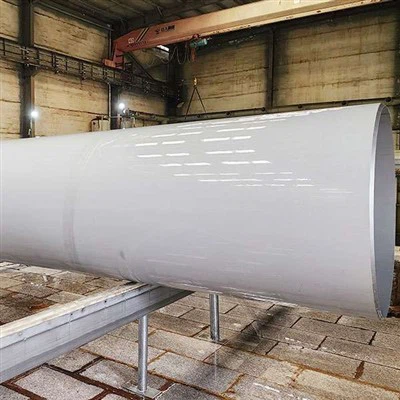
UNS S30403, a commonly used austenitic stainless steel, is known for its excellent corrosion resistance, good formability, and high toughness. As a reliable supplier of UNS S30403, I often encounter inquiries regarding the effects of cold - working on this material. In this blog, I will delve into the various impacts that cold - working has on UNS S30403, which will be of great help to those in the industry, whether they are manufacturers, designers, or simply those interested in stainless steel.
What is Cold - Working?
Cold - working is a metalworking process carried out at room temperature. It involves deforming the metal through processes such as rolling, drawing, bending, or pressing. Unlike hot - working, which is done at elevated temperatures where the metal recrystallizes during deformation, cold - working does not allow for immediate recrystallization. This leads to significant changes in the microstructure and properties of the metal.
Effects on Microstructure
One of the most noticeable effects of cold - working on UNS S30403 is the change in its microstructure. The austenitic grains of UNS S30403 are deformed during cold - working. As the metal is subjected to plastic deformation, dislocations are generated and move within the crystal lattice. These dislocations interact with each other and with other lattice defects, causing them to pile up.
The deformation of the austenitic grains results in an elongation of the grains in the direction of the applied force. This elongation can be observed under a microscope, and it significantly affects the mechanical properties of the material. In addition, cold - working can induce the formation of martensite in UNS S30403. Austenitic stainless steels like UNS S30403 are generally non - magnetic, but cold - working can transform some of the austenite into martensite, which is magnetic. The amount of martensite formed depends on the degree of cold - working; higher levels of deformation lead to a greater amount of martensite formation.
Effects on Mechanical Properties
Hardness and Strength
Cold - working has a profound effect on the hardness and strength of UNS S30403. As dislocations pile up during cold - working, they impede the movement of other dislocations. This increases the resistance to further deformation, resulting in an increase in hardness and strength. The relationship between the degree of cold - working and the increase in strength can be described by the strain - hardening phenomenon.
As the percentage of cold - work increases, the yield strength and ultimate tensile strength of UNS S30403 also increase. For example, a lightly cold - worked UNS S30403 may have a yield strength of around 200 - 250 MPa, while a heavily cold - worked sample can have a yield strength exceeding 500 MPa. However, this increase in strength comes at the cost of ductility.
Ductility
Ductility is the ability of a material to deform plastically before fracture. Cold - working reduces the ductility of UNS S30403. The pile - up of dislocations restricts the movement of atoms and the ability of the material to undergo further plastic deformation. As a result, the elongation and reduction of area values of cold - worked UNS S30403 decrease compared to the annealed state.
For instance, an annealed UNS S30403 sample may have an elongation of over 40% in a tensile test, but after significant cold - working, the elongation can drop to less than 10%. This reduction in ductility must be considered in applications where the material needs to undergo further forming operations or where it is subjected to dynamic loading.
Fatigue Resistance
The fatigue resistance of UNS S30403 can be affected by cold - working. In some cases, a moderate amount of cold - working can improve fatigue resistance. The increased strength and hardness due to cold - working can help to resist crack initiation and propagation under cyclic loading.
However, excessive cold - working can have a negative impact on fatigue resistance. The high residual stresses introduced during cold - working can act as stress raisers, promoting crack initiation. Additionally, the reduced ductility of heavily cold - worked material means that it is less able to absorb energy during cyclic loading, leading to a shorter fatigue life.
Effects on Corrosion Resistance
The corrosion resistance of UNS S30403 is another important aspect affected by cold - working. In general, cold - working can have both positive and negative effects on corrosion resistance.
On one hand, cold - working can improve the resistance to some forms of corrosion. The increased hardness and density of the surface layer due to cold - working can provide a more protective barrier against corrosive agents. For example, in some mild corrosive environments, a cold - worked UNS S30403 surface may show better resistance to general corrosion compared to an annealed surface.
On the other hand, cold - working can also introduce residual stresses. These residual stresses can act as sites for stress - corrosion cracking (SCC). In environments containing chloride ions, such as seawater, the combination of residual stresses and the presence of chloride can lead to SCC in cold - worked UNS S30403. Therefore, proper stress - relieving treatments may be required after cold - working to reduce the risk of SCC.
Applications and Considerations
The effects of cold - working on UNS S30403 have significant implications for its applications. In industries such as automotive, construction, and food processing, cold - worked UNS S30403 is widely used.
In the automotive industry, cold - worked UNS S30403 is used for components such as exhaust systems and decorative trims. The increased strength and hardness make it suitable for withstanding mechanical stresses, while its corrosion resistance ensures a long service life.
In the construction industry, cold - worked UNS S30403 can be used for structural elements and architectural features. However, when using cold - worked UNS S30403 in applications where corrosion resistance is critical, such as in coastal areas, proper surface treatments and stress - relieving operations should be carried out.
It's also worth mentioning some related stainless steel grades. For more information on other high - performance stainless steels, you can refer to our Stainless Steel 317 / UNS S31700 / 1.4449, Stainless Steel 347H / UNS S34709 / 1.4961, and Stainless Steel 316L / UNS S31603 / 1.4404 pages.


Conclusion
In conclusion, cold - working has a wide range of effects on UNS S30403, including changes in microstructure, mechanical properties, and corrosion resistance. These effects can be both beneficial and detrimental, depending on the specific application requirements. As a supplier of UNS S30403, I understand the importance of providing materials with the appropriate properties. Whether you need annealed UNS S30403 for maximum ductility or cold - worked material for increased strength, we can offer high - quality products to meet your needs.
If you are interested in purchasing UNS S30403 or have any questions about its properties and applications, please feel free to contact us for further discussion and procurement negotiations. We are committed to providing you with the best solutions and high - quality stainless steel products.
References
- ASM Handbook, Volume 1: Properties and Selection: Irons, Steels, and High - Performance Alloys.
- Metals Handbook Desk Edition, 3rd Edition.
- Callister, W. D., & Rethwisch, D. G. (2011). Materials Science and Engineering: An Introduction. Wiley.