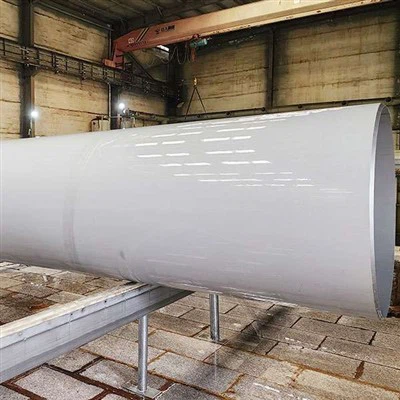
Hey there! As a supplier of UNS S31635, I've seen my fair share of welding projects using this super - popular stainless steel. UNS S31635 is a type of austenitic stainless steel known for its excellent corrosion resistance, high temperature strength, and good formability. It's widely used in various industries like chemical processing, food and beverage, and marine applications. But just like any other material, it has its own set of welding challenges. Let's dive into the common welding defects of UNS S31635 and how we can prevent them.


1. Porosity
Porosity is one of the most common welding defects you might encounter when working with UNS S31635. It looks like small holes or voids in the weld metal. These pores can significantly reduce the strength and corrosion resistance of the weld.
Causes:
- Contamination: If the surface of the UNS S31635 material isn't clean before welding, things like oil, grease, rust, or dirt can get into the weld pool and cause porosity.
- Improper shielding gas: The shielding gas is supposed to protect the weld pool from the surrounding air. If the gas flow rate is too low, or if there's a leak in the gas supply system, oxygen and nitrogen from the air can mix with the weld pool, leading to porosity.
- Moisture: Moisture in the welding electrode or the base metal can also be a culprit. When the moisture is heated during welding, it turns into steam, which gets trapped in the weld metal as pores.
Prevention:
- Surface preparation: Make sure to clean the surface of the UNS S31635 thoroughly before welding. You can use a wire brush, a solvent, or a grinding wheel to remove any contaminants.
- Check the shielding gas: Ensure that the shielding gas flow rate is set correctly according to the welding process and the thickness of the material. Also, regularly inspect the gas supply system for any leaks.
- Store welding consumables properly: Keep welding electrodes and filler metals in a dry environment to prevent moisture absorption.
2. Cracking
Cracking is another serious welding defect that can compromise the integrity of the weld. There are two main types of cracks in UNS S31635 welding: hot cracks and cold cracks.
Hot Cracks:
- These cracks occur during the solidification process of the weld metal. They usually form along the grain boundaries of the weld.
- Causes: High sulfur and phosphorus content in the base metal or the filler metal can increase the susceptibility to hot cracking. Also, improper welding parameters, such as high welding speed or high heat input, can cause hot cracks.
- Prevention: Use low - sulfur and low - phosphorus filler metals. Adjust the welding parameters to ensure a proper balance between heat input and welding speed. For example, you might need to slow down the welding speed to allow the weld metal to solidify more uniformly.
Cold Cracks:
- Cold cracks appear after the weld has cooled down. They are often caused by the presence of hydrogen in the weld metal, residual stresses, and hard microstructures.
- Causes: Hydrogen can come from moisture in the welding consumables, the shielding gas, or the base metal surface. Residual stresses can build up due to improper welding sequence or restraint during welding.
- Prevention: Preheat the base metal before welding to reduce the cooling rate and prevent the formation of hard microstructures. Use low - hydrogen welding consumables and keep them dry. Also, use proper welding sequences and avoid excessive restraint to minimize residual stresses.
3. Lack of Fusion
Lack of fusion means that the weld metal doesn't properly bond with the base metal or the previous weld pass. This can lead to weak joints and potential failure under stress.
Causes:
- Insufficient heat input: If the welding current is too low or the welding speed is too high, the weld metal might not reach the melting point of the base metal, resulting in lack of fusion.
- Incorrect electrode angle: An improper electrode angle can prevent the weld metal from flowing into the joint and fusing with the base metal.
- Poor joint design: A joint with a narrow gap or a deep groove might not allow the weld metal to penetrate properly, causing lack of fusion.
Prevention:
- Adjust welding parameters: Increase the welding current or decrease the welding speed to ensure sufficient heat input.
- Use the correct electrode angle: Follow the recommended electrode angle for the specific welding process and joint design.
- Optimize the joint design: Make sure the joint has an appropriate gap and bevel angle to allow for proper weld metal penetration.
4. Undercutting
Undercutting is a defect where a groove is formed along the edges of the weld bead. It weakens the base metal and can act as a stress - concentration point.
Causes:
- High welding current: A high welding current can cause the base metal to melt too quickly, resulting in the formation of an undercut.
- Fast welding speed: If the welding speed is too fast, the weld metal might not have enough time to fill the joint properly, leaving an undercut.
- Incorrect electrode manipulation: Using an improper electrode movement, such as excessive weaving or a too - wide arc, can also lead to undercutting.
Prevention:
- Adjust welding parameters: Reduce the welding current and adjust the welding speed to a suitable level.
- Improve electrode manipulation: Practice proper electrode movement techniques, such as a steady and controlled weaving motion.
When it comes to choosing the right stainless steel for your project, there are other options apart from UNS S31635. For example, Stainless Steel 321H / UNS S32109 / 1.4878 is known for its good resistance to intergranular corrosion at high temperatures. Stainless Steel 904L / UNS N08904 / 1.4539 offers excellent corrosion resistance in various aggressive environments. And Stainless Steel 317L / UNS S31703 / 1.4438 is a great choice for applications where high corrosion resistance and good weldability are required.
If you're in the market for UNS S31635 or any of these other stainless steels, I'm here to help. Whether you need advice on welding techniques, choosing the right material for your project, or have any other questions, feel free to reach out. I can provide you with high - quality UNS S31635 products and support you throughout your project. Let's have a chat about your needs and see how we can work together to make your project a success.
References
- AWS Welding Handbook, American Welding Society
- Welding Metallurgy, John C. Lippold and David K. Miller
- Stainless Steel Welding Manual, The Nickel Institute