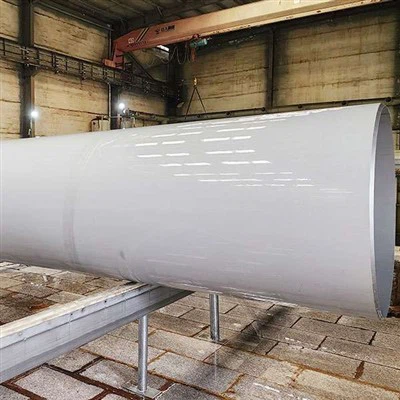
UNS S17400, also known as 17 - 4 PH stainless steel, is a precipitation - hardening martensitic stainless steel that has gained significant popularity in various industries. As a supplier of UNS S17400, I have witnessed firsthand the numerous advantages this material offers over other stainless steel grades. In this blog post, I will delve into the key benefits of using UNS S17400 and explain why it might be the ideal choice for your specific applications.
High Strength and Hardness
One of the most prominent advantages of UNS S17400 is its exceptional strength and hardness. Through a precipitation - hardening heat treatment process, this steel can achieve high levels of strength that are comparable to some alloy steels. The precipitation - hardening mechanism involves the formation of fine particles within the steel matrix, which impede the movement of dislocations and thereby increase the material's strength.
This high strength makes UNS S17400 suitable for applications where structural integrity is crucial. For example, in the aerospace industry, it is used to manufacture components such as landing gear parts, engine mounts, and fasteners. These parts need to withstand high stresses and loads during flight, and the high strength of UNS S17400 ensures their reliable performance.
In contrast, other stainless steel grades like Stainless Steel 316L Mod / UNS S31603 / 1.4435 are austenitic stainless steels, which generally have lower strength compared to precipitation - hardening martensitic stainless steels like UNS S17400. While 316L Mod offers excellent corrosion resistance, it may not be the best choice for applications that require high strength.
Good Corrosion Resistance
UNS S17400 exhibits good corrosion resistance, especially in mild to moderately corrosive environments. The presence of chromium in the steel composition forms a passive oxide layer on the surface, which acts as a barrier against corrosion. This passive layer protects the underlying steel from chemical attack, oxidation, and rusting.
In marine applications, where components are exposed to saltwater and harsh environmental conditions, UNS S17400 can provide reliable corrosion protection. It is used in the construction of marine hardware, such as bolts, nuts, and brackets. However, it's important to note that in highly corrosive environments, additional surface treatments or coatings may be required to enhance its corrosion resistance further.
Compared to Stainless Steel 316Ti / UNS S31635 / 1.4571, which is also known for its good corrosion resistance, UNS S17400 offers a different balance between strength and corrosion resistance. 316Ti is more commonly used in applications where corrosion resistance is the primary concern, such as in the chemical processing industry. But if high strength is also a requirement, UNS S17400 may be a better option.
Machinability
Another advantage of UNS S17400 is its relatively good machinability. Compared to some other high - strength steels, it can be machined more easily, which reduces manufacturing costs and lead times. The martensitic structure of UNS S17400 allows for efficient cutting, drilling, and milling operations.
During the machining process, proper cutting tools and machining parameters need to be selected to optimize the machining performance. For example, using carbide cutting tools and appropriate cutting speeds and feeds can help achieve good surface finishes and dimensional accuracy.


In comparison, Stainless Steel 347 / UNS S34700 / 1.4550 has different machinability characteristics. 347 is an austenitic stainless steel, and its work - hardening tendency during machining can make it more challenging to machine compared to UNS S17400. This means that more care and expertise are required when machining 347, which can increase the overall machining costs.
Weldability
UNS S17400 has acceptable weldability, although special precautions need to be taken during the welding process. Pre - heating and post - weld heat treatment are often necessary to prevent the formation of cracks and to maintain the desired mechanical properties of the welded joint.
When welding UNS S17400, it is important to use appropriate filler metals that are compatible with the base metal. For example, ER309L or ER316L filler metals can be used in some cases. The post - weld heat treatment typically involves a solution annealing followed by a precipitation - hardening treatment to restore the strength and hardness of the welded area.
In contrast, some other high - strength steels may have poor weldability, which can limit their use in applications that require welding. The ability to weld UNS S17400 makes it a more versatile material for fabricating complex structures and components.
Heat Resistance
UNS S17400 can maintain its strength and hardness at elevated temperatures to a certain extent. It has good heat resistance up to approximately 315°C (600°F). This property makes it suitable for applications where components are exposed to moderate heat, such as in some automotive engine parts and industrial furnace components.
However, it's important to note that at higher temperatures, the strength and corrosion resistance of UNS S17400 may start to degrade. In applications where extremely high - temperature resistance is required, other heat - resistant alloys may be more appropriate.
Dimensional Stability
The precipitation - hardening process of UNS S17400 results in good dimensional stability. Once the heat treatment is completed, the material undergoes minimal dimensional changes, which is crucial for applications that require precise dimensions.
In the manufacturing of precision components, such as molds and dies, dimensional stability is essential to ensure the accuracy of the final product. The dimensional stability of UNS S17400 allows for the production of high - quality components with tight tolerances.
Cost - Effectiveness
Considering its combination of high strength, good corrosion resistance, machinability, and weldability, UNS S17400 can be a cost - effective solution for many applications. While it may be more expensive than some common stainless steel grades, its performance advantages can offset the higher initial cost in the long run.
For example, in applications where high strength and corrosion resistance are both required, using UNS S17400 can eliminate the need for additional strengthening or corrosion - protection measures, which can save on overall manufacturing and maintenance costs.
Conclusion
In conclusion, UNS S17400 offers a unique combination of high strength, good corrosion resistance, machinability, weldability, heat resistance, dimensional stability, and cost - effectiveness. These advantages make it a versatile material that is widely used in various industries, including aerospace, marine, automotive, and industrial manufacturing.
If you are looking for a high - performance stainless steel for your specific application, I encourage you to consider UNS S17400. As a supplier, I can provide you with high - quality UNS S17400 products and technical support. Whether you need standard shapes or custom - fabricated components, I am ready to assist you. Please feel free to contact me to discuss your requirements and start a procurement negotiation.
References
- ASM Handbook Volume 1: Properties and Selection: Irons, Steels, and High - Performance Alloys.
- Metals Handbook Desk Edition, 3rd Edition.
- Technical literature on stainless steels from major steel manufacturers.