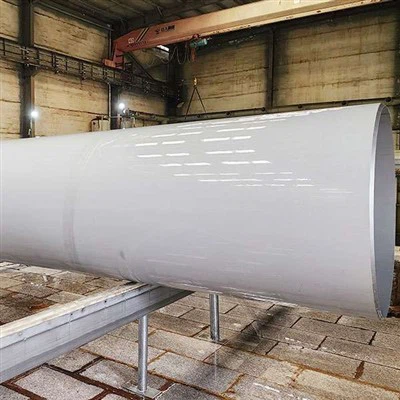
Recycling Monel is not only an environmentally responsible choice but also a cost - effective solution for industries that use this valuable alloy. As a Monel supplier, I've witnessed firsthand the importance of proper recycling processes and the benefits they bring to both the environment and businesses. In this blog, I'll share some insights on how to recycle Monel effectively.
Understanding Monel
Before delving into the recycling process, it's essential to understand what Monel is. Monel is a group of nickel - copper alloys known for their excellent corrosion resistance, high strength, and good ductility. Two of the most common types of Monel are Monel 400 / UNS N04400 / 2.4360 and Monel K500 / UNS N05500 / 2.4375. Monel 400 has a typical composition of about 63% nickel and 28 - 34% copper, along with small amounts of iron, manganese, carbon, and silicon. Monel K500, on the other hand, is a precipitation - hardenable alloy based on Monel 400, with the addition of aluminum and titanium.
The Importance of Recycling Monel
Recycling Monel offers several significant advantages. From an environmental perspective, it reduces the need for mining and refining new raw materials. Mining operations can have a substantial impact on the environment, including habitat destruction, water pollution, and energy consumption. By recycling Monel, we can conserve natural resources and minimize the ecological footprint associated with alloy production.
Economically, recycling Monel is also beneficial. The cost of producing new Monel from virgin materials is relatively high due to the complex extraction and refining processes. Recycling Monel can significantly lower production costs as the recycled material requires less energy and fewer processing steps. Additionally, companies can often sell their scrap Monel for a reasonable price, providing an additional revenue stream.
Steps in Recycling Monel
1. Collection
The first step in recycling Monel is to collect the scrap material. This can come from various sources, such as manufacturing waste, end - of - life products, or surplus inventory. As a Monel supplier, I often work with manufacturers to collect their scrap Monel during the production process. This may involve setting up a dedicated collection system within the manufacturing facility to ensure that all Monel scrap is properly gathered.
For end - of - life products, such as Monel valves, pumps, or heat exchangers, it's important to establish partnerships with waste management companies or recycling centers. These entities can help in the collection and transportation of the scrap Monel to the recycling facility.
2. Sorting
Once the scrap Monel is collected, it needs to be sorted. Sorting is crucial because different types of Monel have different compositions and properties, and they may require different recycling processes. Additionally, the scrap may be contaminated with other metals or non - metallic materials, which need to be removed.
Manual sorting is often used for larger pieces of scrap. Workers visually inspect the scrap and separate it based on its type and any visible contaminants. For smaller pieces or shredded scrap, automated sorting techniques can be employed. These may include magnetic separation to remove ferrous metals, eddy current separation to separate non - ferrous metals, and optical sorting to identify different types of alloys based on their color and reflectivity.
3. Cleaning
After sorting, the scrap Monel needs to be cleaned. Cleaning removes any dirt, grease, paint, or other contaminants that may be present on the surface of the scrap. This is important because contaminants can affect the quality of the recycled alloy and may cause problems during the melting process.
There are several cleaning methods available. Chemical cleaning involves using solvents or acids to dissolve the contaminants. However, this method requires careful handling due to the potential environmental and safety hazards associated with the chemicals. Mechanical cleaning, such as sandblasting or shot peening, can also be used to remove surface contaminants. Water - based cleaning solutions are another option, which are generally more environmentally friendly.
4. Melting
The cleaned and sorted scrap Monel is then melted in a furnace. The melting process is carefully controlled to ensure that the alloy retains its desired properties. Different types of furnaces can be used, such as electric arc furnaces or induction furnaces.
Electric arc furnaces use an electric arc to generate heat, which is suitable for melting large quantities of scrap. Induction furnaces, on the other hand, use electromagnetic induction to heat the metal. They are more energy - efficient and can provide better control over the melting process, making them ideal for melting high - quality alloys like Monel.
During the melting process, fluxes may be added to the furnace. Fluxes help to remove impurities from the molten metal by forming a slag layer on the surface. The slag can then be skimmed off, leaving behind a purer molten Monel.
5. Refining
After melting, the molten Monel may need to be refined to further improve its quality. Refining processes can remove any remaining impurities, adjust the alloy composition, and ensure that the recycled Monel meets the required specifications.
One common refining method is vacuum refining. In a vacuum environment, volatile impurities can be removed from the molten metal. Another method is chemical refining, which involves adding specific chemicals to the molten metal to react with and remove impurities. The choice of refining method depends on the type and level of impurities in the scrap Monel.
6. Casting
Once the molten Monel has been refined, it is cast into the desired shapes. This can include ingots, billets, or other semi - finished products. The casting process needs to be carefully controlled to ensure that the final product has the correct dimensions, density, and microstructure.
There are different casting techniques available, such as sand casting, investment casting, and continuous casting. Sand casting is a relatively simple and cost - effective method for producing large - scale castings. Investment casting is used for producing complex and high - precision parts. Continuous casting is suitable for producing long, uniform shapes such as bars and tubes.
Quality Control in Recycling Monel
Quality control is an essential part of the recycling process to ensure that the recycled Monel meets the required standards. This involves testing the chemical composition, mechanical properties, and microstructure of the recycled alloy.
Chemical analysis can be performed using techniques such as spectroscopy or wet chemical analysis. These methods can accurately determine the percentage of each element in the alloy and ensure that it meets the specified composition range.


Mechanical testing, such as tensile testing, hardness testing, and impact testing, can be used to evaluate the mechanical properties of the recycled Monel. These tests can determine the strength, ductility, and toughness of the alloy, which are important for its performance in various applications.
Microstructural analysis using techniques such as microscopy can provide information about the grain size, phase distribution, and any defects in the alloy. This helps to ensure that the recycled Monel has a uniform and consistent microstructure.
Challenges in Recycling Monel
While recycling Monel offers many benefits, there are also some challenges that need to be addressed. One of the main challenges is the presence of contaminants in the scrap Monel. Contaminants can be difficult to remove completely, and they can affect the quality of the recycled alloy. Additionally, the cost of recycling can be relatively high, especially when considering the collection, sorting, cleaning, and refining processes.
Another challenge is the lack of awareness about the importance of recycling Monel. Many companies may not realize the environmental and economic benefits of recycling, or they may not know how to properly recycle their scrap Monel. As a Monel supplier, I believe it's important to educate our customers about the recycling process and encourage them to participate in recycling initiatives.
Conclusion
Recycling Monel is a crucial process that offers significant environmental and economic benefits. By following the steps of collection, sorting, cleaning, melting, refining, and casting, and implementing strict quality control measures, we can produce high - quality recycled Monel that meets the requirements of various industries.
As a Monel supplier, I'm committed to promoting the recycling of Monel and working with my customers to ensure that their scrap Monel is recycled in the most efficient and environmentally friendly way possible. If you're interested in learning more about our Monel products or have scrap Monel that you'd like to recycle, I encourage you to contact me for a discussion on procurement and recycling opportunities.
References
- "Nickel - Copper Alloys (Monel)" - ASM Handbook, Volume 2: Properties and Selection: Nonferrous Alloys and Special - Purpose Materials
- "Recycling of Non - Ferrous Metals" - Elsevier
- "Alloy Recycling: Principles and Practice" - Springer