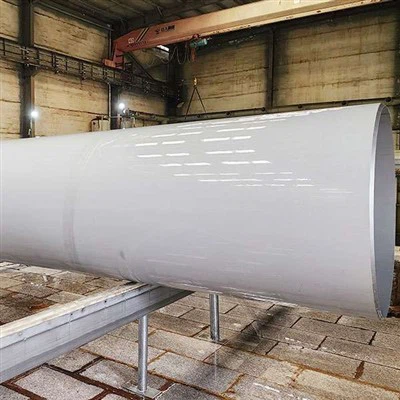
When it comes to stainless steel, two commonly discussed grades are UNS S31603 and 304 stainless steel. As a supplier of UNS S31603, I've had numerous inquiries about how these two grades stack up against each other. In this blog post, I'll delve into the key aspects of both materials, comparing their composition, properties, applications, and more.
Composition
The chemical composition of a stainless - steel grade plays a fundamental role in determining its properties.
304 stainless steel, also known as 1.4301, has a basic composition of around 18 - 20% chromium and 8 - 10.5% nickel. It also contains a small amount of carbon (typically up to 0.08%), silicon, manganese, phosphorus, and sulfur. The chromium in 304 forms a passive oxide layer on the surface, which protects the steel from corrosion. The nickel enhances the ductility and toughness of the material.
On the other hand, UNS S31603, also referred to as Stainless Steel 316L / UNS S31603 / 1.4404, has a more complex composition. It contains 16 - 18% chromium, 10 - 14% nickel, and 2 - 3% molybdenum. Additionally, it has a very low carbon content (maximum 0.03%). The molybdenum in UNS S31603 is the key differentiator. It significantly improves the steel's resistance to pitting and crevice corrosion, especially in environments containing chlorides.

Corrosion Resistance
Corrosion resistance is one of the most important factors when choosing a stainless - steel grade.
304 stainless steel offers good general corrosion resistance in a wide range of environments, including mild atmospheric conditions, fresh water, and many organic chemicals. However, in chloride - rich environments such as seawater, coastal areas, or industrial settings with chloride - containing chemicals, 304 can be prone to pitting and crevice corrosion.
UNS S31603, with its molybdenum content, provides superior corrosion resistance in chloride - rich environments. The molybdenum helps to maintain the integrity of the passive oxide layer, even in the presence of aggressive chloride ions. This makes UNS S31603 a preferred choice for applications in marine environments, food processing plants where salt or brine is used, and chemical processing industries.
Mechanical Properties
In terms of mechanical properties, both grades have similarities but also some differences.
304 stainless steel has a good balance of strength and ductility. It has a tensile strength of around 515 - 655 MPa and a yield strength of approximately 205 MPa. It can be easily formed, welded, and machined, making it suitable for a wide range of fabrication processes.
UNS S31603 also exhibits good mechanical properties. Its tensile strength is in the range of 485 - 655 MPa, and the yield strength is about 170 MPa. The lower carbon content in UNS S31603 reduces the risk of carbide precipitation during welding, which can lead to intergranular corrosion. This makes UNS S31603 more weld - friendly, especially in applications where welding is a critical step in the manufacturing process.
Heat Resistance
Heat resistance is another aspect to consider, especially for applications in high - temperature environments.
304 stainless steel can withstand temperatures up to about 870°C in continuous service and 925°C in intermittent service. However, at high temperatures, its strength and corrosion resistance can start to degrade.
UNS S31603 has slightly better heat resistance. It can maintain its mechanical properties and corrosion resistance at higher temperatures compared to 304. It is suitable for applications in high - temperature environments such as heat exchangers, furnaces, and exhaust systems.
Cost
Cost is always a significant factor in material selection. Generally, 304 stainless steel is less expensive than UNS S31603. The lower cost of 304 is mainly due to its simpler chemical composition and wider availability. If the application does not require the enhanced corrosion resistance or heat resistance provided by UNS S31603, 304 can be a more cost - effective option.
However, in situations where the long - term durability and performance of the material are crucial, the additional cost of UNS S31603 may be justified. The reduced maintenance and replacement costs over the lifespan of the product can offset the initial higher investment.
Applications
The differences in composition, properties, and cost between 304 and UNS S31603 lead to different application areas.
304 stainless steel is widely used in a variety of industries. In the food and beverage industry, it is used for making kitchen equipment such as sinks, countertops, and appliances. It is also commonly used in architectural applications, like building facades and handrails, due to its aesthetic appeal and good corrosion resistance in normal atmospheric conditions. In the automotive industry, 304 is used for exhaust systems and decorative trim.
UNS S31603, with its superior corrosion resistance, is preferred in more demanding environments. In the marine industry, it is used for shipbuilding, offshore platforms, and marine equipment. In the chemical processing industry, it is used for storing and transporting corrosive chemicals. It is also commonly used in the pharmaceutical industry for equipment that comes into contact with corrosive substances and requires high levels of hygiene.

Other Related Grades
While comparing 304 and UNS S31603, it's worth mentioning other related stainless - steel grades. For example, Stainless Steel 317L / UNS S31703 / 1.4438 has an even higher molybdenum content (3 - 4%) than UNS S31603, providing even better corrosion resistance in highly corrosive environments. Stainless Steel 347H / UNS S34709 / 1.4961 contains niobium, which stabilizes the steel against intergranular corrosion at high temperatures, making it suitable for high - temperature applications.
Conclusion
In conclusion, both 304 stainless steel and UNS S31603 have their own unique advantages. 304 is a versatile and cost - effective option for general applications where moderate corrosion resistance is sufficient. On the other hand, UNS S31603 offers superior corrosion resistance, especially in chloride - rich and high - temperature environments, making it ideal for more demanding applications.

If you're in the process of selecting a stainless - steel grade for your project and need further guidance, or if you're interested in purchasing UNS S31603, feel free to reach out. We're here to provide you with the best solutions and high - quality products to meet your specific requirements.
References
- ASM Handbook Volume 13A: Corrosion: Fundamentals, Testing, and Protection
- Stainless Steel World Magazine, various issues
- Manufacturer's technical data sheets for 304 and UNS S31603 stainless steel