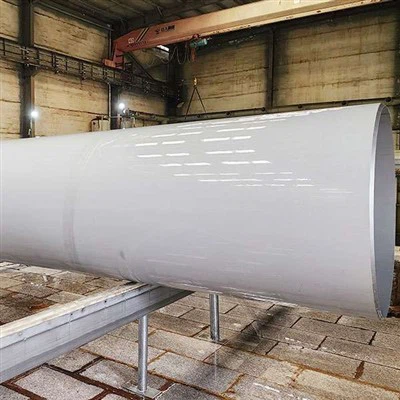
Hey there! As a supplier of UNS S30400, I've gotten tons of questions about how this stainless - steel alloy performs under cyclic loading. So, I thought I'd dive deep into this topic and share some insights with you.
What is UNS S30400?
First off, let's quickly go over what UNS S30400 is. It's a commonly used austenitic stainless steel. Austenitic means it has a face - centered cubic crystal structure, which gives it some pretty cool properties like good formability, corrosion resistance, and weldability. You'll often find it in a wide range of applications, from kitchen equipment to chemical processing plants.
Cyclic Loading Basics
Cyclic loading is when a material is subjected to repeated or fluctuating stresses. Think of a bridge that has cars constantly driving over it, or a machine part that moves back and forth in a repetitive motion. These repeated stresses can lead to something called fatigue failure, which is different from a one - time overload failure. Fatigue failure happens when cracks start to form and grow over time due to the cyclic stresses.
How UNS S30400 Handles Cyclic Loading
Fatigue Resistance
One of the key aspects of how UNS S30400 performs under cyclic loading is its fatigue resistance. In general, this alloy shows a decent level of fatigue resistance. The austenitic structure plays a big role here. The face - centered cubic structure allows for some dislocation movement within the material. When the cyclic stresses are applied, these dislocations can move and interact in a way that helps the material absorb and distribute the stress.
However, it's important to note that the fatigue resistance of UNS S30400 can be affected by a few factors. For example, the surface finish of the material matters a lot. A smooth surface finish can reduce the stress concentration points where cracks might start to form. On the other hand, a rough surface with scratches or pits can act as stress raisers, making the material more prone to fatigue failure.
Crack Initiation and Propagation
Under cyclic loading, cracks in UNS S30400 usually start at the surface. Once a crack initiates, it begins to propagate through the material. The rate of crack propagation depends on several things, like the magnitude of the cyclic stress, the frequency of the loading, and the environment.
In a relatively benign environment, the crack propagation in UNS S30400 is somewhat predictable. But when the environment is corrosive, things get a bit more complicated. For instance, if the material is exposed to a salty or acidic environment while under cyclic loading, corrosion can accelerate the crack propagation. The corrosion products can act as wedges, forcing the crack to open up more quickly.
Influence of Temperature
Temperature also has an impact on how UNS S30400 performs under cyclic loading. At elevated temperatures, the material's mechanical properties change. The strength of the alloy generally decreases with increasing temperature, which can reduce its fatigue resistance. However, the austenitic structure of UNS S30400 gives it relatively good thermal stability compared to some other alloys.
At low temperatures, the material becomes more brittle. This brittleness can increase the likelihood of crack initiation under cyclic loading. So, if you're using UNS S30400 in an application where the temperature varies a lot, you need to take these temperature - related effects into account.
Comparing with Other Alloys
It's always interesting to see how UNS S30400 stacks up against other stainless - steel alloys when it comes to cyclic loading. Let's take a look at a few comparisons.
Against Stainless Steel 347H / UNS S34709 / 1.4961
Stainless Steel 347H has niobium added to its composition. This addition helps to stabilize the alloy at high temperatures. In terms of cyclic loading, 347H generally has better high - temperature fatigue resistance compared to UNS S30400. If your application involves cyclic loading at high temperatures, 347H might be a better choice.
Against Stainless Steel 316L Mod / UNS S31603 / 1.4435
Stainless Steel 316L Mod has a higher molybdenum content than UNS S30400. This gives it better corrosion resistance, especially in chloride - containing environments. When it comes to cyclic loading in a corrosive environment, 316L Mod might outperform UNS S30400 because the reduced corrosion means less acceleration of crack propagation.
Against Stainless Steel 317 / UNS S31700 / 1.4449
Stainless Steel 317 has even more molybdenum than 316L Mod. It offers enhanced corrosion resistance and also has good mechanical properties under cyclic loading. In applications where there's a combination of high - level corrosion and cyclic stresses, 317 might be a more suitable option compared to UNS S30400.


Applications and Considerations
UNS S30400 is still a great choice for many applications involving cyclic loading. For example, in food processing equipment, the cyclic loading might come from the repeated opening and closing of valves or the movement of conveyor belts. The corrosion resistance and good formability of UNS S30400 make it well - suited for these types of applications.
When using UNS S30400 in cyclic - loading applications, there are a few things to keep in mind. First, make sure to have proper design and engineering. This includes avoiding sharp corners and edges in the part design to reduce stress concentration. Second, pay attention to the surface finish. A smooth surface can significantly improve the fatigue life of the material. And finally, if the environment is corrosive, consider using some form of protective coating or choose a more corrosion - resistant alloy if necessary.
Wrapping Up and Reaching Out
In conclusion, UNS S30400 has its strengths and limitations when it comes to cyclic loading. It offers a good balance of properties like formability, corrosion resistance, and decent fatigue resistance in many common applications. But depending on the specific requirements of your application, you might need to make some adjustments or even consider other alloys.
If you're in the market for UNS S30400 or have questions about how it can be used in your cyclic - loading application, don't hesitate to reach out. I'm here to help you find the best solution for your needs.
References
- ASM Handbook Volume 13A: Corrosion: Fundamentals, Testing, and Protection
- ASTM Standards on Stainless Steel Properties and Testing
- "Stainless Steels: A Practical Guide" by George E. Totten