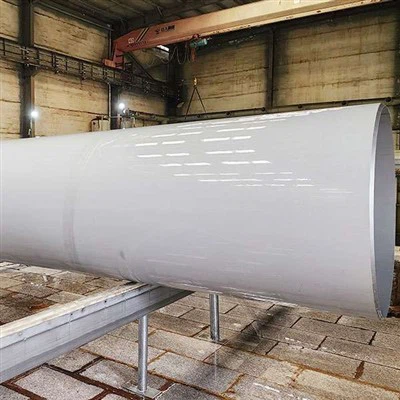
Hey there! As a supplier of UNS S31653, I often get asked whether this material can be used in nuclear power plants. It's a pretty important question, given the high - stakes environment of nuclear power generation. So, let's dig into this topic and see if UNS S31653 has what it takes to be a part of nuclear power plants.


First off, let's understand what UNS S31653 is. It's a type of stainless steel, and it belongs to the austenitic stainless - steel family. Austenitic stainless steels are known for their excellent corrosion resistance, good formability, and high ductility. These properties make them suitable for a wide range of applications, from kitchenware to industrial equipment.
In nuclear power plants, materials need to meet some really strict requirements. They've got to be able to withstand high temperatures, high pressures, and the corrosive effects of the reactor coolant. Plus, they need to have good radiation resistance to avoid becoming brittle or losing their mechanical properties over time.
Let's talk about corrosion resistance. One of the main reasons why stainless steels are popular in many industries is their ability to resist corrosion. UNS S31653 has a relatively high chromium and nickel content, which gives it good general corrosion resistance. Chromium forms a passive oxide layer on the surface of the steel, which acts as a barrier against further corrosion. Nickel enhances the stability of this passive layer and also improves the steel's resistance to pitting and crevice corrosion.
When compared to other common stainless steels used in various industries, like Stainless Steel 316L Mod / UNS S31603 / 1.4435, Stainless Steel 304L / UNS S30403 / 1.4306, 1.4307, and Stainless Steel 317L / UNS S31703 / 1.4438, UNS S31653 has some unique features. For example, it may have a different chemical composition that can give it an edge in certain corrosion - prone environments.
In a nuclear power plant, the reactor coolant can be a mixture of water and various chemicals, and it's usually at a high temperature and pressure. This kind of environment can be really tough on materials. But the high corrosion resistance of UNS S31653 might make it a good candidate for components that come into contact with the coolant, such as pipes and heat exchangers.
Now, let's look at the mechanical properties. Nuclear power plant components need to have good strength and toughness. UNS S31653 has a reasonable yield strength and tensile strength, which means it can handle the mechanical stresses that come with high - pressure operations. Its high ductility also allows it to deform plastically without fracturing, which is a crucial property in case of unexpected loads or vibrations.
Another important aspect is radiation resistance. When materials are exposed to radiation in a nuclear power plant, they can undergo changes in their microstructure. This can lead to hardening, embrittlement, and a reduction in their ductility. Austenitic stainless steels, including UNS S31653, generally have better radiation resistance compared to some other types of steels. The face - centered cubic (FCC) crystal structure of austenitic stainless steels helps to absorb and dissipate the energy from radiation, reducing the likelihood of significant damage.
However, it's not all smooth sailing. There are still some challenges when considering using UNS S31653 in nuclear power plants. One issue is the long - term behavior of the material under continuous radiation exposure. Although it has good initial radiation resistance, over time, there could be some degradation of its properties. Scientists and engineers are constantly researching and monitoring the long - term effects of radiation on materials like UNS S31653 to make sure they can be safely used in nuclear applications.
Another concern is the cost. High - performance materials like UNS S31653 can be more expensive than some other alternatives. In the nuclear power industry, where large amounts of materials are needed, cost can be a significant factor. But if the benefits in terms of performance and safety outweigh the cost, then it might still be a viable option.
Regulatory requirements also play a huge role. Nuclear power plants are highly regulated, and any material used in them has to meet strict standards set by regulatory bodies. These standards cover everything from the chemical composition of the material to its manufacturing process and quality control. Before UNS S31653 can be widely used in nuclear power plants, it has to go through a rigorous testing and certification process to ensure it meets all these requirements.
So, can UNS S31653 be used in nuclear power plants? The answer is it's possible. Its corrosion resistance, mechanical properties, and radiation resistance make it a promising candidate. But there are still some challenges to overcome, especially in terms of long - term performance and regulatory approval.
In conclusion, as a supplier of UNS S31653, I believe that with further research, development, and testing, this material could find its place in the nuclear power industry. If you're in the nuclear power business and are interested in learning more about UNS S31653, I'd be more than happy to have a chat with you. Whether it's about its properties, applications, or how it can fit into your specific project, I'm here to help. Just reach out, and we can start a discussion about how UNS S31653 might work for you.
References
- Various research papers on the properties of austenitic stainless steels in high - temperature, high - pressure, and radiation - exposed environments.
- Industry standards and regulations for materials used in nuclear power plants.