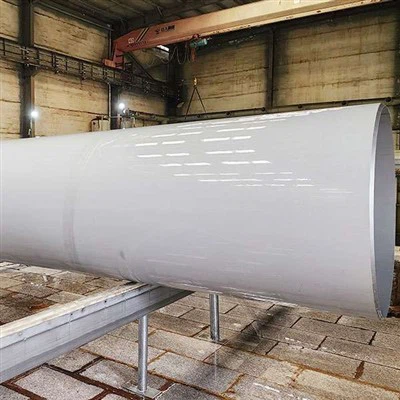
In the realm of construction, especially when it comes to buildings in seismic - prone areas, the choice of materials is of utmost importance. One material that often comes under consideration is UNS S30403, a type of stainless steel. As a supplier of UNS S30403, I've been involved in numerous discussions with architects, engineers, and contractors about its suitability for seismic - resistant buildings. In this blog, I'll delve into the characteristics of UNS S30403 and analyze whether it can indeed be used in such demanding construction projects.


Understanding UNS S30403
UNS S30403, also known as Stainless Steel 304L, is a low - carbon version of the widely used 304 stainless steel. It is designated with the numbers 1.4306 and 1.4307 in the European standard. Stainless Steel 304L / UNS S30403 / 1.4306, 1.4307 This stainless steel is austenitic, which means it has a face - centered cubic crystal structure. This structure gives it several advantageous properties, such as excellent corrosion resistance, good formability, and high ductility.
Key Properties of UNS S30403 and Their Relevance to Seismic Resistance
Ductility
Ductility is a crucial property for materials used in seismic - resistant buildings. When an earthquake occurs, the building is subjected to dynamic forces that cause it to deform. A ductile material can undergo significant plastic deformation without fracturing. UNS S30403 has high ductility, which allows it to absorb and dissipate energy during seismic events. This energy absorption helps to reduce the impact of the seismic forces on the building structure, preventing sudden and catastrophic failures. For example, during an earthquake, the steel components made of UNS S30403 can bend and stretch, rather than breaking immediately, which is essential for maintaining the integrity of the building.
Corrosion Resistance
Buildings in seismic - prone areas may be exposed to various environmental conditions, including moisture, saltwater (in coastal regions), and industrial pollutants. Corrosion can weaken the structural components over time, reducing their ability to withstand seismic forces. UNS S30403 offers excellent corrosion resistance due to the presence of chromium in its composition. Chromium forms a passive oxide layer on the surface of the steel, which protects it from further oxidation and corrosion. This means that the steel components made of UNS S30403 can maintain their strength and integrity over a long period, even in harsh environments.
Strength
While ductility is important, strength is also a necessary factor. UNS S30403 has sufficient strength to support the loads in a building structure. It can resist the static loads such as the weight of the building itself, as well as the dynamic loads during an earthquake. The combination of strength and ductility makes it a viable option for structural applications in seismic - resistant buildings.
Comparison with Other Stainless Steels
To better understand the suitability of UNS S30403 for seismic - resistant buildings, it's useful to compare it with other stainless steels.
Stainless Steel 904L / UNS N08904 / 1.4539
Stainless Steel 904L / UNS N08904 / 1.4539 is a high - alloy stainless steel with excellent corrosion resistance, especially in highly corrosive environments. However, it is relatively more expensive than UNS S30403. In terms of seismic resistance, both materials have good ductility, but the cost - effectiveness of UNS S30403 makes it a more attractive option for large - scale construction projects.
Stainless Steel 316Ti / UNS S31635 / 1.4571
Stainless Steel 316Ti / UNS S31635 / 1.4571 is another austenitic stainless steel with enhanced corrosion resistance compared to 304L, especially in chloride - containing environments. However, when it comes to seismic resistance, the difference in performance between 316Ti and UNS S30403 is not significant in most cases. UNS S30403 can provide comparable seismic performance at a lower cost, making it a more practical choice for many construction projects.
Design Considerations for Using UNS S30403 in Seismic - Resistant Buildings
Although UNS S30403 has favorable properties for seismic - resistant buildings, proper design is essential to ensure its effective use.
Structural Design
Engineers need to design the building structure in a way that takes full advantage of the ductility and strength of UNS S30403. This may involve using appropriate connection details, such as welded or bolted connections, that can transfer the seismic forces effectively between the steel components. The layout of the structural members should also be optimized to distribute the seismic loads evenly throughout the building.
Fire Resistance
In addition to seismic resistance, fire resistance is also an important consideration. While UNS S30403 has some degree of fire resistance, additional fire - protection measures may be required in high - rise or critical buildings. This could include the use of fire - resistant coatings or insulation to prevent the steel from losing its strength at high temperatures during a fire.
Case Studies and Real - World Applications
There are several examples of buildings in seismic - prone areas that have successfully used stainless steel, including UNS S30403, in their construction. For instance, some modern commercial buildings in earthquake - prone regions have incorporated stainless steel structural elements. These buildings have withstood seismic events with minimal damage, demonstrating the effectiveness of using stainless steel in seismic - resistant design.
Challenges and Limitations
Despite its many advantages, there are also some challenges and limitations when using UNS S30403 in seismic - resistant buildings.
Cost
Although UNS S30403 is more cost - effective compared to some other high - alloy stainless steels, the cost of stainless steel is generally higher than that of carbon steel. This can be a significant factor in large - scale construction projects, especially when budget constraints are tight.
Welding and Fabrication
Welding and fabrication of UNS S30403 require specific techniques and skills. Improper welding can lead to the formation of weld defects, which may reduce the strength and ductility of the steel. Therefore, it is essential to ensure that the welding and fabrication processes are carried out by experienced professionals following the appropriate standards.
Conclusion
In conclusion, UNS S30403 can be used in seismic - resistant buildings. Its high ductility, corrosion resistance, and sufficient strength make it a suitable material for structural applications in earthquake - prone areas. When compared to other stainless steels, it offers a good balance between performance and cost. However, proper design, fabrication, and installation are crucial to ensure its effective use.
If you are involved in a construction project in a seismic - prone area and are considering using UNS S30403, I encourage you to contact me for further discussion. I can provide you with detailed information about the material, including its properties, availability, and pricing. We can also work together to develop a solution that meets your specific project requirements.
References
- ASCE 7 - 16, Minimum Design Loads and Associated Criteria for Buildings and Other Structures.
- AISI Stainless Steel Design Manual.
- EN 10088 - 1:2005, Stainless steels - Part 1: List of stainless steels.