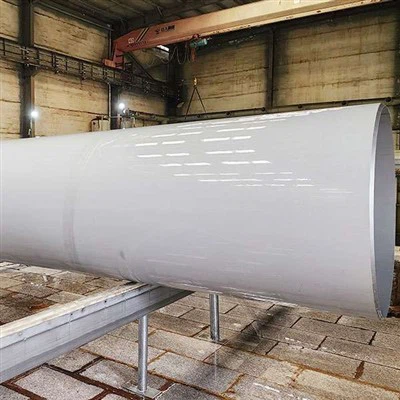
Duplex stainless steels have gained significant popularity in various industries due to their excellent combination of mechanical properties and corrosion resistance. Among them, Duplex S32205 stands out as a widely used grade. As a supplier of Duplex S32205, I often receive inquiries about its thermal conductivity. In this blog post, I will delve into what the thermal conductivity of Duplex S32205 is, its influencing factors, and its significance in practical applications.
Understanding Thermal Conductivity
Thermal conductivity is a fundamental property of materials that describes their ability to conduct heat. It is defined as the quantity of heat that passes through a unit area of a material in a unit time under a unit temperature gradient. The SI unit of thermal conductivity is watts per meter - kelvin (W/(m·K)). A high thermal conductivity means that the material can transfer heat quickly, while a low thermal conductivity indicates that the material is a poor conductor of heat and may act as an insulator.
Thermal Conductivity of Duplex S32205
Duplex S32205, also known as Duplex S32205 / F60, is a two - phase alloy consisting of approximately equal amounts of ferrite and austenite. The thermal conductivity of Duplex S32205 is typically in the range of about 15 - 20 W/(m·K) at room temperature. This value is relatively lower compared to some pure metals like copper (about 400 W/(m·K)) or aluminum (about 200 W/(m·K)), but it is still sufficient for many industrial applications.
The specific value of thermal conductivity can vary depending on several factors. One of the main factors is the chemical composition of the alloy. Minor variations in the amounts of elements such as chromium, nickel, molybdenum, and nitrogen can affect the crystal structure and the movement of heat - carrying particles (such as electrons and phonons) within the material, thus influencing the thermal conductivity.
The microstructure of Duplex S32205 also plays a crucial role. The distribution and proportion of ferrite and austenite phases can impact how heat is transferred through the material. For example, a more uniform distribution of the two phases may lead to more consistent heat transfer characteristics. Additionally, the presence of any inclusions, defects, or precipitates in the microstructure can scatter heat - carrying particles, reducing the thermal conductivity.
Comparison with Other Duplex Grades
When comparing Duplex S32205 with other duplex stainless steel grades, such as Duplex S31803 / F51 / 1.4462, their thermal conductivities are relatively similar. Both grades have a two - phase structure that results in comparable heat - transfer capabilities. However, the slightly different chemical compositions of these grades may cause minor differences in thermal conductivity. For instance, Duplex S32205 generally contains a higher amount of certain alloying elements, which may lead to a slightly different thermal conductivity value compared to Duplex S31803.
Significance in Practical Applications
The thermal conductivity of Duplex S32205 is an important consideration in many industrial applications.
Heat Exchangers
In heat exchangers, the ability of a material to transfer heat efficiently is crucial. Although the thermal conductivity of Duplex S32205 is not as high as some pure metals, its excellent corrosion resistance makes it a preferred choice in environments where corrosion is a concern. For example, in chemical processing plants, heat exchangers made of Duplex S32205 can withstand the corrosive effects of various chemicals while still being able to transfer heat effectively. The relatively stable thermal conductivity of Duplex S32205 ensures consistent heat - transfer performance over time, reducing the need for frequent maintenance and replacement.
Pressure Vessels
Pressure vessels are often used to store and process fluids at high temperatures and pressures. The thermal conductivity of Duplex S32205 affects how quickly the vessel can be heated or cooled during operation. A proper understanding of its thermal conductivity helps in designing the heating and cooling systems for pressure vessels to ensure efficient operation and prevent thermal stress - related failures.
Structural Components in High - Temperature Environments
In some high - temperature applications, such as in power plants or certain manufacturing processes, structural components made of Duplex S32205 need to withstand both high temperatures and mechanical stresses. The thermal conductivity of the material influences how heat is distributed within the component, which in turn affects its mechanical properties. By knowing the thermal conductivity, engineers can design components that can handle the thermal and mechanical loads more effectively.
Factors Affecting Thermal Conductivity in Different Conditions
The thermal conductivity of Duplex S32205 is also affected by temperature. As the temperature increases, the thermal conductivity of Duplex S32205 generally shows a non - linear change. At lower temperatures, the movement of electrons and phonons is relatively restricted, and the thermal conductivity may increase gradually with temperature. However, at higher temperatures, the increased lattice vibrations and the scattering of heat - carrying particles can cause the thermal conductivity to level off or even decrease slightly.
The presence of external factors such as pressure and mechanical deformation can also influence the thermal conductivity. High pressure can compress the material, changing its microstructure and affecting the movement of heat - carrying particles. Mechanical deformation, such as cold working or welding, can introduce defects and dislocations in the material, which can scatter heat - carrying particles and reduce the thermal conductivity.
Quality Control and Assurance of Thermal Conductivity
As a supplier of Duplex S32205, we take strict quality control measures to ensure that the thermal conductivity of our products meets the specified requirements. We use advanced testing methods, such as the laser flash method, to accurately measure the thermal conductivity of our materials. This method involves heating a small sample of the material with a laser pulse and measuring the temperature rise on the opposite side of the sample. By analyzing the temperature - time curve, we can calculate the thermal conductivity of the material.
We also conduct comprehensive chemical analysis and microstructure examination to ensure that the chemical composition and microstructure of our Duplex S32205 products are consistent. This helps to maintain the stability of the thermal conductivity and other properties of the material.
Conclusion
The thermal conductivity of Duplex S32205 is an important property that affects its performance in various industrial applications. With a typical thermal conductivity in the range of 15 - 20 W/(m·K) at room temperature, it offers a good balance between heat - transfer capabilities and corrosion resistance. Factors such as chemical composition, microstructure, temperature, and external conditions can influence its thermal conductivity.
If you are in need of high - quality Duplex S32205 products for your specific applications, please feel free to contact us for procurement and further discussions. We are committed to providing you with the best products and services based on our in - depth knowledge and experience in the field of duplex stainless steels.

References
- ASM Handbook, Volume 13A: Corrosion: Fundamentals, Testing, and Protection. ASM International.
- Duplex Stainless Steels: Properties, Design, and Applications. Edited by J. Kosec, M. Kocijan, and A. Sturm. Wiley - VCH Verlag GmbH & Co. KGaA.