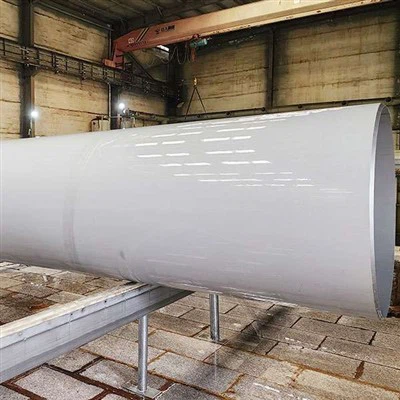
Duplex stainless steels have gained significant popularity in various industries due to their excellent combination of mechanical properties and corrosion resistance. Among these, Duplex S32205 stands out as a widely used grade, and nitrogen plays a crucial role in its performance. As a supplier of Duplex S32205, I have witnessed firsthand the impact of nitrogen on this remarkable alloy.
Nitrogen's Influence on Microstructure
One of the primary functions of nitrogen in Duplex S32205 is to influence its microstructure. Duplex stainless steels are characterized by a two - phase microstructure consisting of ferrite (α) and austenite (γ). Nitrogen is a strong austenite stabilizer. In the solidification process of Duplex S32205, the addition of nitrogen promotes the formation of austenite. This is essential because a balanced ferrite - austenite ratio is crucial for the alloy's overall performance.
A proper balance between ferrite and austenite phases helps to optimize the mechanical properties of Duplex S32205. The ferrite phase provides high strength and good resistance to stress - corrosion cracking, while the austenite phase enhances ductility, toughness, and resistance to pitting and crevice corrosion. By stabilizing the austenite phase, nitrogen ensures that the alloy maintains the desired phase balance even during welding and heat - treatment processes.
Strengthening Mechanisms
Nitrogen also contributes to the strengthening of Duplex S32205. It can dissolve in both the ferrite and austenite phases, acting as an interstitial solid - solution strengthener. In the ferrite phase, nitrogen atoms occupy the interstitial sites, causing lattice distortion. This distortion impedes the movement of dislocations, which are responsible for plastic deformation. As a result, the strength of the ferrite phase is increased.
In the austenite phase, nitrogen has a similar effect. It not only enhances the strength but also improves the work - hardening rate. This means that as the alloy is deformed, it becomes stronger, which is beneficial in applications where the material is subjected to high - stress conditions. The strengthening effect of nitrogen allows Duplex S32205 to achieve high yield and tensile strengths, making it suitable for use in structural components and pressure vessels.
Corrosion Resistance
Corrosion resistance is one of the most important properties of Duplex S32205, and nitrogen plays a vital role in this aspect. Nitrogen significantly improves the pitting and crevice corrosion resistance of the alloy. It does this by promoting the formation of a more stable and protective passive film on the surface of the material. The passive film acts as a barrier that prevents the underlying metal from reacting with the corrosive environment.
Nitrogen also helps to inhibit the initiation and propagation of pits. It reduces the critical pitting potential, which is the minimum potential at which pitting corrosion can occur. In addition, nitrogen can increase the repassivation ability of the alloy. When a pit is formed, nitrogen promotes the rapid formation of a new passive film on the exposed metal surface, preventing the pit from growing further.
In environments containing chloride ions, such as seawater, the presence of nitrogen in Duplex S32205 is particularly beneficial. Chloride ions are known to cause pitting and crevice corrosion in many metals and alloys. However, the nitrogen - enhanced corrosion resistance of Duplex S32205 makes it a reliable choice for applications in marine and offshore industries, such as seawater desalination plants, oil and gas platforms, and shipbuilding.
Weldability
Weldability is an important consideration in many applications of Duplex S32205. Nitrogen has a positive impact on the weldability of this alloy. During welding, the heat input can cause changes in the microstructure of the base metal and the weld zone. Without proper control, these changes can lead to a loss of the desired ferrite - austenite balance and a decrease in corrosion resistance.
Nitrogen helps to maintain the phase balance in the weld zone. It promotes the formation of austenite in the weld metal, which is similar to its effect in the base metal. This ensures that the weld has similar properties to the base metal in terms of strength, corrosion resistance, and toughness. In addition, nitrogen can reduce the formation of harmful intermetallic phases, such as sigma (σ) and chi (χ) phases, which can embrittle the weld and reduce its corrosion resistance.
Comparison with Other Duplex Grades
When comparing Duplex S32205 with other duplex stainless steel grades, such as Duplex S31803 / F51 / 1.4462, the role of nitrogen becomes even more apparent. Duplex S32205 generally contains a higher amount of nitrogen compared to Duplex S31803. This results in better corrosion resistance, especially in pitting and crevice corrosion.
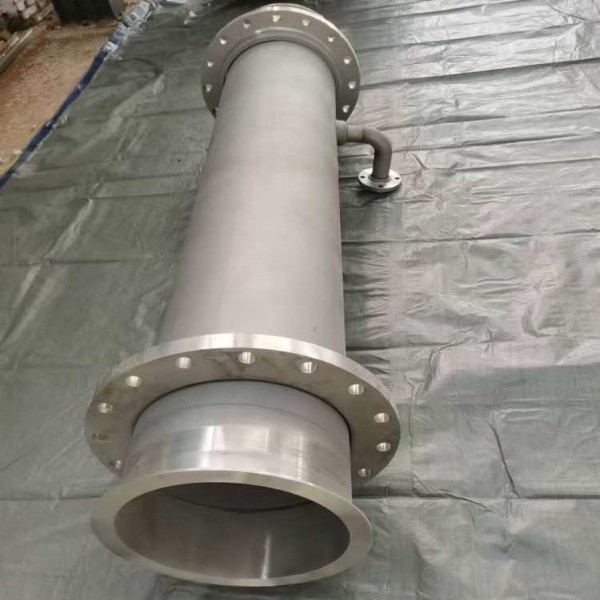

The higher nitrogen content in Duplex S32205 also gives it superior mechanical properties. It has higher yield and tensile strengths, as well as better ductility and toughness. These advantages make Duplex S32205 a more suitable choice for applications that require higher performance in terms of both corrosion resistance and mechanical strength.
Applications of Duplex S32205
The unique properties of Duplex S32205, which are influenced by nitrogen, make it suitable for a wide range of applications. In the chemical processing industry, it is used in equipment such as heat exchangers, reactors, and pipelines. The high corrosion resistance of Duplex S32205 ensures that these components can withstand the harsh chemical environments, including acids, alkalis, and salts.
In the oil and gas industry, Duplex S32205 / F60 is used in subsea pipelines, wellhead equipment, and offshore platforms. The combination of high strength and excellent corrosion resistance makes it ideal for these applications, where the materials are exposed to high pressures, high temperatures, and corrosive seawater.
In the food and beverage industry, Duplex S32205 is used in equipment such as storage tanks, processing vessels, and piping systems. Its corrosion resistance and hygienic properties make it a safe and reliable choice for handling food and beverages.
Conclusion
In conclusion, nitrogen plays a multifaceted and crucial role in Duplex S32205. It influences the microstructure, strengthens the alloy, improves corrosion resistance, enhances weldability, and makes it suitable for a wide range of applications. As a supplier of Duplex S32205, I am well - aware of the importance of nitrogen in ensuring the high quality and performance of this alloy.
If you are looking for a reliable material for your next project, consider Duplex S32205. Its unique properties, enhanced by nitrogen, make it a cost - effective and high - performance solution. Whether you are in the chemical processing, oil and gas, marine, or food and beverage industry, Duplex S32205 can meet your requirements. Contact us today to discuss your specific needs and start a procurement negotiation.
References
- ASM Handbook, Volume 13A: Corrosion: Fundamentals, Testing, and Protection.
- Stainless Steel World Magazine, various issues on duplex stainless steels.
- Research papers on the properties and applications of Duplex S32205 published in journals such as Corrosion Science and Journal of Materials Science.