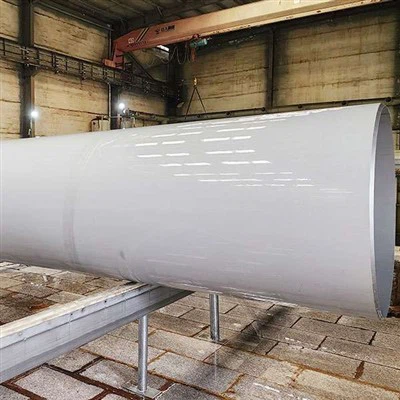
UNS 31609 is a widely used austenitic stainless steel, known for its excellent corrosion resistance, high strength, and good weldability. As a reliable supplier of UNS 31609, I am often asked about the heat treatment process for this alloy. In this blog post, I will provide a detailed overview of the heat treatment process for UNS 31609, including annealing, stress relieving, and solution treatment.
Understanding UNS 31609
Before delving into the heat treatment process, it's important to understand the basic properties and composition of UNS 31609. This alloy is a modification of the standard 316 stainless steel, with a higher carbon content (up to 0.08%) compared to the 316L grade (max 0.03% carbon). The increased carbon content enhances the strength of the material, especially at elevated temperatures. UNS 31609 also contains significant amounts of chromium (16 - 18%), nickel (10 - 14%), and molybdenum (2 - 3%), which contribute to its corrosion resistance, particularly in chloride - rich environments.
Annealing Process
Annealing is a heat treatment process used to relieve internal stresses, improve ductility, and refine the grain structure of the material. For UNS 31609, the annealing process typically involves heating the material to a specific temperature range, holding it at that temperature for a certain period, and then cooling it down at a controlled rate.
The recommended annealing temperature for UNS 31609 is between 1040°C - 1120°C (1900°F - 2050°F). At this temperature, the carbon in the alloy is dissolved into the austenitic matrix, and any internal stresses are relieved. The material should be held at the annealing temperature for a sufficient time to ensure uniform heating throughout the cross - section. A general rule of thumb is to hold the material for about 30 minutes per 25 mm (1 inch) of thickness.
After the holding period, the material can be cooled rapidly in water or air. Water quenching provides a faster cooling rate, which helps to maintain the austenitic structure and prevent the formation of carbides. However, air cooling can also be used, especially for thinner sections or when a slower cooling rate is desired to minimize distortion.
Stress Relieving
Stress relieving is a heat treatment process used to reduce internal stresses in the material without significantly altering its microstructure. This process is often carried out after cold working, machining, or welding operations. For UNS 31609, stress relieving is typically performed at a lower temperature compared to annealing.
The recommended stress - relieving temperature for UNS 31609 is between 650°C - 870°C (1200°F - 1600°F). The material is heated to this temperature range and held for a period of 1 - 2 hours, depending on the thickness of the part. After the holding period, the material is slowly cooled in the furnace to room temperature. This slow cooling rate helps to minimize the development of new internal stresses during the cooling process.
Stress relieving is particularly important for applications where dimensional stability is critical, such as in precision components or welded structures. By reducing internal stresses, the risk of cracking, distortion, and premature failure is significantly reduced.
Solution Treatment
Solution treatment is a heat treatment process used to dissolve any carbides or other precipitates in the alloy and create a homogeneous austenitic structure. This process is similar to annealing but is often used for materials that have been subjected to high - temperature service or welding, where carbide precipitation may have occurred.
For UNS 31609, the solution treatment temperature is in the range of 1040°C - 1120°C (1900°F - 2050°F), the same as the annealing temperature. The material is heated to this temperature and held for a sufficient time to dissolve the carbides. Similar to annealing, the holding time depends on the thickness of the material, with a general guideline of 30 minutes per 25 mm (1 inch) of thickness.
After the holding period, the material is rapidly quenched in water to prevent the re - precipitation of carbides during cooling. This rapid cooling rate ensures that the alloy retains its austenitic structure and corrosion resistance.
Comparison with Other Stainless Steel Alloys
It's interesting to compare the heat treatment processes of UNS 31609 with other related stainless steel alloys. For example, Stainless Steel 316LN / UNS S31653 / 1.4406, 1.4429 has a lower carbon content (max 0.03%) compared to UNS 31609. The lower carbon content reduces the risk of carbide precipitation during welding and heat treatment, so the heat treatment requirements for 316LN may be less stringent in terms of preventing carbide formation.
Stainless Steel 317L / UNS S31703 / 1.4438 has a higher molybdenum content (3 - 4%) than UNS 31609, which enhances its corrosion resistance in more aggressive environments. The heat treatment processes for 317L are similar to those of UNS 31609, but the specific temperature ranges and holding times may vary slightly depending on the desired properties.
Stainless Steel 347H / UNS S34709 / 1.4961 contains niobium, which stabilizes the alloy against carbide precipitation. The heat treatment for 347H is also focused on achieving a homogeneous structure and relieving internal stresses, but the addition of niobium allows for a wider range of heat treatment parameters.
Importance of Proper Heat Treatment
Proper heat treatment of UNS 31609 is crucial for achieving the desired mechanical properties and corrosion resistance. If the heat treatment is not performed correctly, several issues can arise. For example, if the annealing or solution treatment temperature is too low or the holding time is insufficient, carbides may not be fully dissolved, leading to reduced corrosion resistance, especially in chloride - containing environments.
On the other hand, if the temperature is too high or the cooling rate is too fast, the material may experience excessive distortion or cracking. In addition, improper stress relieving can result in dimensional instability and premature failure of the component.
Contact for Procurement
As a leading supplier of UNS 31609, I am committed to providing high - quality materials and technical support. If you are interested in purchasing UNS 31609 or have any questions about its heat treatment process, please feel free to contact me. I can offer a wide range of UNS 31609 products, including bars, sheets, plates, and pipes, and can assist you in selecting the most suitable heat treatment process for your specific application.


References
- ASM Handbook Volume 4: Heat Treating. ASM International.
- Stainless Steel Handbook. Nickel Institute.
- Welding and Joining of Stainless Steels. The Welding Institute.