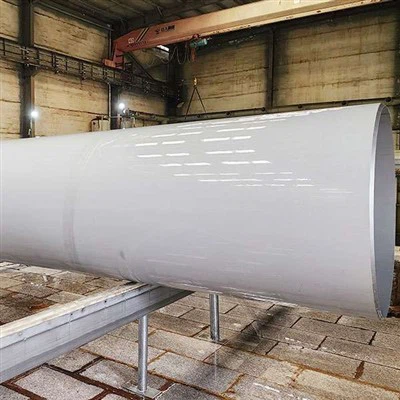
What is the elongation of Incoloy?
As a dedicated supplier of Incoloy alloys, I often encounter inquiries about various properties of these remarkable materials, and one question that frequently comes up is about the elongation of Incoloy. Elongation is a crucial mechanical property that provides valuable insights into the behavior of a material under tensile stress. In this blog post, we'll delve into what elongation means in the context of Incoloy, its significance, and how it varies across different Incoloy grades.
Understanding Elongation
Elongation is a measure of how much a material can stretch or deform before it breaks when subjected to a tensile force. It is typically expressed as a percentage and is determined through a standardized test known as the tensile test. During a tensile test, a sample of the material is placed in a testing machine, and a gradually increasing force is applied until the sample fractures. The elongation is then calculated by comparing the original length of the sample to its length at the point of fracture.
In the case of Incoloy alloys, which are a group of nickel - iron - chromium superalloys known for their excellent corrosion resistance, high - temperature strength, and oxidation resistance, elongation plays a vital role in determining their suitability for various applications. A higher elongation percentage indicates that the material can undergo more deformation without breaking, which is often desirable in applications where the material needs to be formed or shaped, such as in the manufacturing of pipes, tubes, and sheets.


Elongation in Different Incoloy Grades
There are several different grades of Incoloy alloys, each with its own unique combination of properties. Let's take a closer look at the elongation characteristics of some of the most commonly used Incoloy grades.
Incoloy 800 / UNS N08800 / 1.4876
Incoloy 800 / UNS N08800 / 1.4876 is a versatile alloy that offers good strength and corrosion resistance at elevated temperatures. In its annealed condition, Incoloy 800 typically exhibits an elongation of around 30 - 40%. This level of elongation makes it suitable for a wide range of applications, including heat exchangers, furnace components, and chemical processing equipment. The relatively high elongation allows the alloy to be easily formed into complex shapes during manufacturing processes such as bending, rolling, and welding.
Incoloy 800HT / UNS N08811 / 1.4959
Incoloy 800HT / UNS N08811 / 1.4959 is a modified version of Incoloy 800 with enhanced high - temperature properties. It is designed to maintain its strength and integrity at temperatures up to 1100°C (2012°F). The elongation of Incoloy 800HT in the annealed state is similar to that of Incoloy 800, typically in the range of 30 - 40%. This makes it a popular choice for applications in the power generation, petrochemical, and aerospace industries, where components are exposed to high temperatures and require good formability.
Incoloy 825 / UNS N08825 / 2.4858
Incoloy 825 / UNS N08825 / 2.4858 is a nickel - iron - chromium - molybdenum - copper alloy that offers excellent resistance to a wide range of corrosive environments, including sulfuric acid, phosphoric acid, and seawater. In its annealed condition, Incoloy 825 has an elongation of approximately 35 - 45%. This higher elongation compared to some other Incoloy grades makes it particularly well - suited for applications where the material needs to withstand both corrosion and deformation, such as in the construction of offshore oil and gas platforms, chemical storage tanks, and desalination plants.
Factors Affecting Elongation
The elongation of Incoloy alloys can be influenced by several factors, including the alloy composition, heat treatment, and testing conditions.
Alloy Composition
The specific elements present in an Incoloy alloy and their proportions can have a significant impact on its elongation. For example, the addition of certain alloying elements such as nickel, chromium, and molybdenum can improve the strength and corrosion resistance of the alloy but may also affect its ductility and elongation. A careful balance of these elements is required to achieve the desired combination of properties.
Heat Treatment
Heat treatment is a critical process in the manufacturing of Incoloy alloys. Different heat treatment processes, such as annealing, quenching, and tempering, can alter the microstructure of the alloy, which in turn affects its mechanical properties, including elongation. Annealing, for example, is often used to relieve internal stresses and improve the ductility of the alloy, resulting in a higher elongation percentage.
Testing Conditions
The conditions under which the tensile test is conducted can also affect the measured elongation. Factors such as the strain rate, temperature, and sample preparation can all have an impact on the test results. For accurate and consistent results, it is important to follow standardized testing procedures and ensure that the testing conditions are carefully controlled.
Importance of Elongation in Applications
The elongation of Incoloy alloys is of great importance in many practical applications. In the manufacturing industry, a high elongation allows for easier forming and machining of the material, reducing production costs and improving the quality of the finished products. For example, in the production of pipes and tubes, a material with good elongation can be bent and shaped into the desired configuration without cracking or breaking.
In high - temperature applications, such as in furnaces and power plants, the ability of Incoloy alloys to undergo some deformation without fracturing is crucial. This is because components in these environments are often subjected to thermal expansion and contraction, which can cause significant stress. A material with a high elongation can better accommodate these stresses, reducing the risk of failure and extending the service life of the components.
Contact for Incoloy Procurement
If you are in need of high - quality Incoloy alloys for your specific application, I encourage you to reach out to us. As a leading supplier of Incoloy products, we have a wide range of grades and forms available, and we can provide you with detailed information about the elongation and other properties of our alloys. Whether you need Incoloy 800, Incoloy 800HT, Incoloy 825, or any other grade, we are here to assist you in finding the most suitable solution for your needs. Contact us today to start a discussion about your procurement requirements.
References
- ASM Handbook, Volume 2: Properties and Selection: Nonferrous Alloys and Special - Purpose Materials.
- "Nickel and Nickel Alloys" by L. C. Smith and J. R. Davis.
- ASTM Standards for Tensile Testing of Metals.