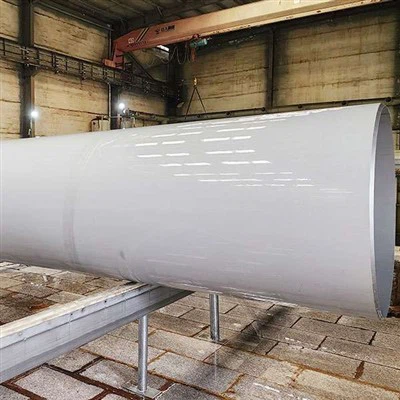
Hey there! As a supplier of Duplex S32205, I've seen firsthand how temperature can have a huge impact on the properties of this amazing material. So, I thought I'd share some insights on what happens to Duplex S32205 when the temperature changes.
First off, let's talk a bit about what Duplex S32205 is. It's a type of duplex stainless steel that combines the best of both austenitic and ferritic stainless steels. This gives it some really cool properties like high strength, good corrosion resistance, and excellent weldability. You can learn more about it Duplex S32205 / F60.
Now, when it comes to temperature, there are a few key areas where it can affect Duplex S32205. Let's start with the mechanical properties.
Mechanical Properties
Tensile Strength
At room temperature, Duplex S32205 has a pretty high tensile strength. But as the temperature goes up, things start to change. When you heat it, the atoms in the steel start to move around more freely. This reduces the internal forces that hold the material together, and as a result, the tensile strength decreases.
For example, in a study, at room temperature (around 20°C), Duplex S32205 might have a tensile strength of about 620 MPa. But when you heat it to around 300°C, the tensile strength can drop to around 550 MPa. And if you keep going up to 500°C, it can drop even further, maybe to around 450 MPa.
On the other hand, when the temperature goes down, the atoms have less energy and are more tightly packed. This actually increases the tensile strength. So, in cold environments, Duplex S32205 can be even stronger than at room temperature.
Ductility
Ductility is the ability of a material to deform plastically without breaking. At room temperature, Duplex S32205 has a good level of ductility. But as the temperature rises, the ductility generally increases. This is because the increased atomic mobility makes it easier for the material to deform.
However, if you heat it too much, say above 600°C, something called sigma phase can start to form. The sigma phase is a hard and brittle intermetallic compound. When it forms in Duplex S32205, it reduces the ductility significantly. The material becomes more prone to cracking and breaking under stress.

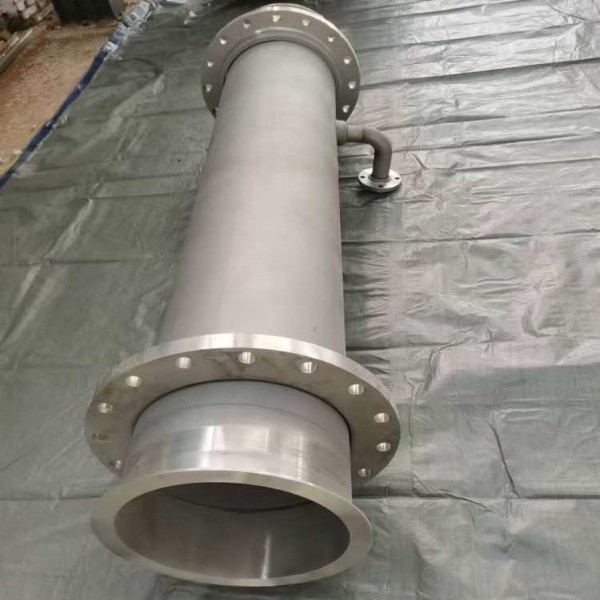
In cold temperatures, the ductility of Duplex S32205 decreases. The reduced atomic mobility makes it harder for the material to deform, and it becomes more brittle. This is important to consider in applications where the material might be exposed to very cold conditions, like in Arctic oil and gas platforms.
Corrosion Resistance
Pitting Corrosion
Pitting corrosion is a type of localized corrosion where small holes or pits form on the surface of the material. Temperature has a big impact on the pitting corrosion resistance of Duplex S32205.
At lower temperatures, the corrosion rate is generally slower. The passive film on the surface of the steel, which protects it from corrosion, is more stable. But as the temperature increases, the chemical reactions that cause pitting corrosion speed up. The passive film becomes less stable, and it's easier for chloride ions (which are often present in environments like seawater) to penetrate the film and start attacking the metal.
For instance, in seawater at room temperature, Duplex S32205 has excellent pitting corrosion resistance. But if you heat the seawater to around 60°C, the risk of pitting corrosion increases significantly.
Crevice Corrosion
Crevice corrosion occurs in small gaps or crevices where the flow of oxygen is restricted. Similar to pitting corrosion, temperature affects crevice corrosion in Duplex S32205.
At higher temperatures, the rate of crevice corrosion increases. The increased temperature speeds up the chemical reactions inside the crevice, and it becomes easier for the protective passive film to break down. In applications where there are potential crevices, like in some types of piping connections, it's important to consider the temperature to prevent crevice corrosion.
Microstructure Changes
As I mentioned earlier, when you heat Duplex S32205, the sigma phase can form. This usually happens at temperatures between 600°C and 900°C. The formation of the sigma phase is a problem because it not only reduces the ductility but also the corrosion resistance of the material.
Another thing that can happen is the formation of other intermetallic phases. These phases can also have a negative impact on the properties of Duplex S32205. For example, the chi phase can form at similar temperatures as the sigma phase. It also makes the material more brittle and less corrosion - resistant.
Applications and Temperature Considerations
Oil and Gas Industry
In the oil and gas industry, Duplex S32205 is used in a lot of applications, like pipelines and offshore platforms. These structures can be exposed to a wide range of temperatures.
In deep - sea oil and gas extraction, the water temperature can be very cold. As we've seen, Duplex S32205 can maintain good strength in cold conditions. But on the surface, during the processing of the oil and gas, the temperature can be much higher. So, engineers need to carefully consider the temperature range and how it will affect the properties of the material.
Chemical Processing
In chemical processing plants, Duplex S32205 is used because of its good corrosion resistance. But different chemical processes can involve different temperatures. For example, in some acid - based processes, the temperature might be relatively high. The high temperature can increase the risk of corrosion, so proper design and material selection are crucial.
Why Choose Our Duplex S32205
We, as a supplier, understand all these temperature - related effects on Duplex S32205. We make sure that our Duplex S32205 is of the highest quality. We control the manufacturing process carefully to minimize the formation of unwanted phases like the sigma phase.
Our Duplex S32205 is also tested thoroughly to ensure that it meets the required standards for mechanical properties and corrosion resistance at different temperatures. If you're in an industry where temperature variations are a concern, our Duplex S32205 can be a great choice for your applications.
If you're interested in learning more about how our Duplex S32205 can work for your specific temperature - related needs, or if you want to place an order, don't hesitate to reach out to us. We're here to help you make the right decision for your projects. And if you want to compare Duplex S32205 with other duplex steels, you can check out Duplex S31803 / F51 / 1.4462.
References
- Some paper on the mechanical properties of duplex stainless steels at different temperatures
- A research study on the corrosion behavior of Duplex S32205 in high - temperature environments
- Industry standards for the use of Duplex S32205 in oil and gas and chemical processing applications