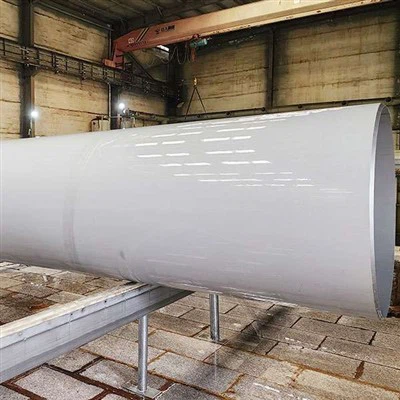
UNS S32109 is a stabilized austenitic stainless steel that offers excellent corrosion resistance and good mechanical properties. As a supplier of UNS S32109, I have witnessed firsthand the importance of understanding how machining processes can affect its mechanical properties. In this blog post, I will delve into the various aspects of machining and its impact on the mechanical characteristics of UNS S32109.

Machining Processes and Their Influence
Machining operations such as turning, milling, drilling, and grinding are commonly used to shape UNS S32109 into the desired components. Each of these processes exerts different forces and heat on the material, which can lead to changes in its mechanical properties.
Turning
Turning is a process where a workpiece rotates while a cutting tool removes material to create a cylindrical shape. During turning, the cutting forces can induce residual stresses in the surface layer of the UNS S32109. These residual stresses can either be compressive or tensile, depending on the cutting parameters such as cutting speed, feed rate, and depth of cut. Compressive residual stresses can enhance the fatigue resistance of the material, while tensile residual stresses may reduce it.
The heat generated during turning can also cause changes in the microstructure of the material. If the cutting speed is too high, excessive heat can lead to the formation of a heat - affected zone (HAZ). In the HAZ, the grain structure may be altered, and precipitation of secondary phases can occur. These microstructural changes can affect the hardness, strength, and ductility of the UNS S32109.
Milling
Milling involves the use of a rotating multi - point cutting tool to remove material from the workpiece. Similar to turning, milling generates cutting forces and heat. The intermittent cutting action in milling can cause vibrations, which may lead to the formation of surface irregularities and micro - cracks in the UNS S32109.
The choice of milling cutter geometry and cutting parameters is crucial in minimizing the negative effects on the mechanical properties. For example, using a cutter with a high helix angle can reduce the cutting forces and improve the surface finish. Additionally, proper coolant application can help dissipate the heat generated during milling, preventing excessive thermal damage to the material.
Drilling
Drilling is used to create holes in the UNS S32109. The cutting forces in drilling are concentrated at the drill tip, and the heat generated can be significant, especially when drilling deep holes. High temperatures can cause the drill bit to wear rapidly and can also lead to the formation of a hardened layer around the drilled hole.
The presence of this hardened layer can affect the fit and assembly of components. Moreover, the drilling process can introduce tensile residual stresses around the hole, which may reduce the fatigue life of the part. To mitigate these issues, proper drill bit selection, cutting speed, and feed rate should be employed, along with adequate coolant to control the temperature.

Grinding
Grinding is a finishing process used to achieve a high - precision surface finish. However, grinding generates a large amount of heat due to the high - speed interaction between the abrasive grains and the workpiece. If not properly controlled, this heat can cause thermal damage to the UNS S32109, such as grinding burn and micro - cracking.
Grinding burn is characterized by a change in the surface color and hardness of the material. It can significantly reduce the corrosion resistance and fatigue strength of the UNS S32109. To prevent grinding burn, appropriate grinding parameters, such as wheel speed, feed rate, and depth of cut, should be selected, and sufficient coolant should be applied.
Impact on Mechanical Properties
Hardness
Machining can have a significant impact on the hardness of UNS S32109. The heat generated during machining can cause the material to undergo phase transformations and precipitation hardening in the surface layer. For example, in the heat - affected zone created during turning or milling, the hardness may increase due to the formation of fine - grained structures or the precipitation of secondary phases.
On the other hand, if the machining process is too aggressive and causes excessive heat, it can also lead to softening of the material due to over - tempering or grain growth. Therefore, careful control of machining parameters is essential to achieve the desired hardness in the final component.
Strength
The strength of UNS S32109 can be affected by machining in several ways. Residual stresses induced during machining can either enhance or reduce the strength of the material. Compressive residual stresses can act as a barrier to crack initiation and propagation, thereby increasing the fatigue strength. However, tensile residual stresses can promote crack growth and reduce the overall strength of the component.
Microstructural changes caused by machining, such as grain refinement or the formation of brittle phases, can also influence the strength. Grain refinement generally leads to an increase in strength, while the presence of brittle phases can reduce the ductility and strength of the material.
Ductility
Ductility is an important property that determines the ability of a material to deform plastically without fracturing. Machining processes that cause excessive heat or introduce high residual stresses can reduce the ductility of UNS S32109. For example, grinding burn can lead to the formation of micro - cracks and brittle phases, which significantly reduce the ductility of the material.
Proper machining techniques, such as using appropriate cutting parameters and coolant, can help maintain the ductility of the UNS S32109. By minimizing the heat generation and residual stresses, the material can retain its ability to deform plastically, which is crucial for applications where components may be subjected to large deformations.
Comparison with Other Stainless Steels
When considering the machining effects on mechanical properties, it is useful to compare UNS S32109 with other stainless steels such as Stainless Steel 316LN / UNS S31653 / 1.4406, 1.4429, Stainless Steel 304 / UNS S30400 / 1.4301, and Stainless Steel 316Ti / UNS S31635 / 1.4571.
UNS S32109 generally has better resistance to intergranular corrosion compared to Stainless Steel 304 due to the presence of titanium, which stabilizes the carbon and prevents the formation of chromium carbides at grain boundaries. In terms of machining, UNS S32109 may require more careful control of cutting parameters because of its higher strength and hardness compared to Stainless Steel 304.
Compared to Stainless Steel 316LN and Stainless Steel 316Ti, UNS S32109 has a different chemical composition and microstructure, which can lead to different responses to machining. For example, the titanium in UNS S32109 can affect the chip formation and tool wear during machining, and the resulting mechanical properties may also vary.
Conclusion
As a supplier of UNS S32109, I understand the critical role that machining plays in determining the mechanical properties of this material. Machining processes can have both positive and negative effects on the hardness, strength, and ductility of UNS S32109. By carefully controlling the machining parameters, such as cutting speed, feed rate, depth of cut, and coolant application, it is possible to minimize the negative effects and achieve the desired mechanical properties in the final components.
If you are interested in purchasing UNS S32109 for your projects and would like to discuss the machining requirements and how it can be optimized for your specific application, please feel free to contact me. I am more than happy to assist you in making the right choices and ensuring the best performance of your components.
References
- ASM Handbook, Volume 16: Machining, ASM International.
- "Stainless Steel: Properties, Processing, and Applications" by George E. Totten and David Scott MacKenzie.
- Research papers on the machining of austenitic stainless steels from academic journals such as the International Journal of Machine Tools and Manufacture.