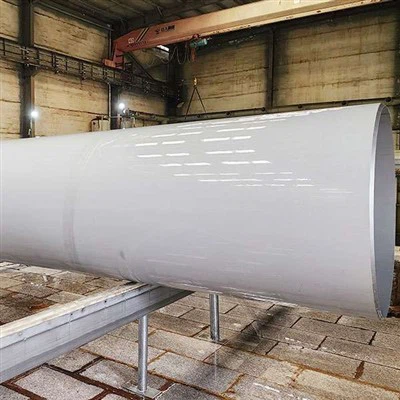
As a supplier of UNS S32109, I've witnessed firsthand the growing interest in this remarkable stainless - steel alloy. UNS S32109 is a stabilized austenitic stainless steel, which is a variation of the well - known 321 stainless steel. The "09" in its designation indicates a higher carbon content, leading to enhanced strength compared to the standard 321 grade.
Chemical Composition and Basic Properties
Before delving into the environmental effects, it's essential to understand the basic properties of UNS S32109. The alloy contains approximately 17 - 19% chromium, 9 - 12% nickel, up to 2% manganese, and a small amount of titanium, which stabilizes the steel against intergranular corrosion. The higher carbon content gives it better high - temperature strength. This alloy is known for its excellent formability, weldability, and corrosion resistance under normal conditions. It can be used in various industries such as aerospace, chemical processing, and food processing.

Influence of Temperature
One of the most significant environmental factors affecting the properties of UNS S32109 is temperature. At low temperatures, the alloy retains its toughness and ductility. This is crucial in applications where the material is exposed to cold environments, such as cryogenic storage tanks or equipment used in polar regions. The austenitic structure of UNS S32109 remains stable at low temperatures, preventing the formation of brittle phases that could lead to catastrophic failure.
On the other hand, at high temperatures, the alloy's properties change in a more complex way. As the temperature rises, the strength of UNS S32109 initially decreases due to the increased mobility of dislocations within the crystal lattice. However, the presence of titanium in the alloy helps to maintain its strength up to relatively high temperatures by forming titanium carbides. These carbides act as barriers to dislocation movement, thereby improving the creep resistance of the material. Creep is the slow, time - dependent deformation that occurs under a constant load at high temperatures. In applications like heat exchangers and furnace components, the high - temperature strength and creep resistance of UNS S32109 are highly valued.
Corrosive Environments
The corrosion resistance of UNS S32109 is one of its most important properties, but it can be affected by different corrosive environments. In a general atmospheric environment, the alloy forms a passive oxide layer on its surface, which protects it from further oxidation and corrosion. This passive layer is mainly composed of chromium oxide, which is highly stable and adherent.
In a chloride - containing environment, such as seawater or coastal areas, the situation becomes more challenging. Chloride ions can penetrate the passive layer and cause localized corrosion, such as pitting and crevice corrosion. The pitting corrosion occurs when chloride ions break down the passive layer at specific points, leading to the formation of small holes or pits on the surface of the alloy. Crevice corrosion, on the other hand, happens in areas where there are crevices or gaps, such as at the joints of pipes or between two metal surfaces. The presence of chloride ions in these crevices can disrupt the passive layer and initiate corrosion.
However, compared to some other stainless - steel alloys like [Stainless Steel 304L / UNS S30403 / 1.4306, 1.4307](/alloys/stainless - steel/stainless - steel - 304l - uns - s30403 - 1 - 4306 - 1 - 4307.html), UNS S32109 has better resistance to chloride - induced corrosion due to the stabilizing effect of titanium. Titanium helps to prevent the precipitation of chromium carbides at grain boundaries, which can lead to a phenomenon called sensitization. Sensitized stainless steel is more susceptible to intergranular corrosion in a corrosive environment.
Influence of pH
The pH of the environment also plays a role in the corrosion behavior of UNS S32109. In a neutral or slightly alkaline environment, the alloy is relatively stable. The passive oxide layer on the surface remains intact, providing good protection against corrosion. However, in acidic environments, the situation is different.
Acids can react with the passive layer and dissolve it, exposing the underlying metal to further corrosion. For example, in a sulfuric acid environment, the alloy may experience uniform corrosion at a relatively high rate. The rate of corrosion depends on the concentration of the acid, temperature, and the presence of other impurities in the solution. In some cases, if the acid contains reducing agents, the corrosion rate can be even higher.
Comparison with Other Alloys
When comparing UNS S32109 with other stainless - steel alloys, its unique properties become more apparent. [Stainless Steel 904L / UNS N08904 / 1.4539](/alloys/stainless - steel/stainless - steel - 904l - uns - n08904 - 1 - 4539.html) is a high - alloy austenitic stainless steel with excellent corrosion resistance in a wide range of corrosive environments, including highly acidic and chloride - containing solutions. However, it is more expensive than UNS S32109. UNS S32109 offers a good balance between cost and performance, especially in applications where high - temperature strength and moderate corrosion resistance are required.
[Stainless Steel 347H / UNS S34709 / 1.4961](/alloys/stainless - steel/stainless - steel - 347h - uns - s34709 - 1 - 4961.html) is another stabilized austenitic stainless steel. Similar to UNS S32109, it contains a stabilizing element (niobium in this case) to prevent intergranular corrosion. However, the high - temperature properties of these two alloys may differ due to the different stabilizing elements and carbon contents. UNS S32109, with its higher carbon content, generally has better high - temperature strength in some applications.
Applications and Environmental Considerations
In the aerospace industry, UNS S32109 is used in components that are exposed to a wide range of temperatures and environmental conditions. For example, in aircraft engines, parts made of this alloy need to withstand high - temperature gases and potential exposure to moisture and contaminants. The high - temperature strength and corrosion resistance of UNS S32109 make it a suitable choice for such applications.
In the chemical processing industry, the alloy is used in equipment for handling various chemicals. The environmental conditions in chemical plants can be extremely harsh, with the presence of acids, alkalis, and organic solvents. Understanding the environmental effects on UNS S32109 is crucial for ensuring the long - term performance and safety of the equipment.
Conclusion and Call to Action
In conclusion, the environment has a profound effect on the properties of UNS S32109. Temperature, corrosive agents, and pH are all important factors that can influence its strength, corrosion resistance, and other mechanical properties. As a supplier of UNS S32109, I understand the importance of these environmental effects and can provide you with the most suitable material for your specific application.
Whether you are in the aerospace, chemical processing, or any other industry that requires high - performance stainless - steel alloys, I'm here to assist you. If you have any questions about UNS S32109 or need to discuss your procurement needs, feel free to reach out. We can work together to ensure that you get the best - quality UNS S32109 products that meet your requirements.
References
- ASM Handbook Volume 13A: Corrosion: Fundamentals, Testing, and Protection. ASM International.
- Stainless Steel Handbook, edited by L. L. Shreir, J. A. Stratton, and R. J. Kane. Butterworth - Heinemann.
- "Corrosion Resistance of Austenitic Stainless Steels in Chloride - Containing Environments", Journal of Materials Science and Technology.