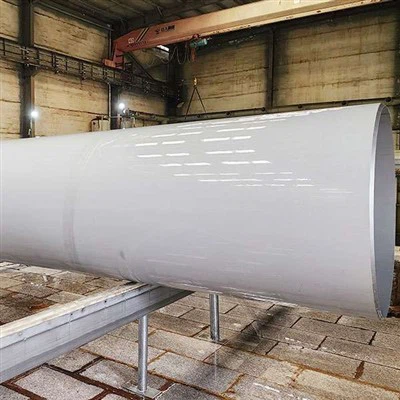
Hey there! As a supplier of UNS S30403, I've seen firsthand how impurities can have a big impact on the properties of this stainless - steel grade. Let's dive into what these effects are and why they matter.
Understanding UNS S30403
First off, UNS S30403 is a low - carbon version of the popular 304 stainless steel. It's widely used in various industries like food processing, architecture, and chemical handling because of its good corrosion resistance, formability, and weldability. But when impurities sneak into the mix, things can get a bit complicated.
Effects on Corrosion Resistance
One of the most significant properties of UNS S30403 is its corrosion resistance. However, impurities can mess this up big time. Sulfur, for example, is a common impurity. Even in small amounts, sulfur can form sulfide inclusions. These inclusions act as initiation sites for corrosion. They can break the protective oxide layer on the surface of the steel, allowing corrosive agents like oxygen and moisture to reach the underlying metal.
Chloride ions are another problem. If there are chloride impurities in the environment where the UNS S30403 is used, or if they're present in the steel itself, they can cause pitting corrosion. Pitting is a form of localized corrosion where small holes or pits form on the surface of the steel. This not only weakens the material but can also lead to its premature failure.
For instance, in a food - processing plant, where stainless steel equipment is constantly exposed to water and various chemicals, even a tiny amount of impurity - induced pitting can contaminate the food products. So, keeping impurities in check is crucial for maintaining the corrosion - resistant properties of UNS S30403.
Impact on Mechanical Properties
Impurities also have a say in the mechanical properties of UNS S30403. Phosphorus is an impurity that can increase the brittleness of the steel. When the steel contains too much phosphorus, it becomes more prone to cracking, especially under stress. This is a major issue in applications where the steel needs to withstand high loads or sudden impacts.
On the other hand, silicon, if present in excessive amounts, can harden the steel. While a bit of hardness can be beneficial in some cases, too much of it can reduce the ductility of the steel. Ductility is the ability of the steel to deform without breaking. So, if the UNS S30403 loses its ductility due to silicon impurities, it may not be suitable for applications that require forming or bending, like in the manufacturing of architectural structures.
Influence on Weldability
Weldability is a key feature of UNS S30403. But impurities can throw a wrench in the works. Sulfur and phosphorus, as mentioned earlier, can cause hot cracking during welding. Hot cracking occurs when the steel is in a semi - molten state during the welding process. The impurities lower the melting point of the steel in certain areas, creating weak spots that are prone to cracking.


Moreover, nitrogen impurities can affect the microstructure of the weld. If the nitrogen content is too high, it can lead to the formation of brittle phases in the weld zone. This reduces the strength and toughness of the weld, making it more likely to fail under stress.
How We Ensure Quality as a Supplier
As a supplier of UNS S30403, we take impurity control very seriously. We use advanced refining processes to minimize the presence of impurities in our steel. We also conduct rigorous testing at every stage of production. This includes chemical analysis to check the exact composition of the steel and non - destructive testing to detect any potential flaws caused by impurities.
We understand that different applications have different requirements when it comes to impurity levels. For example, in the medical industry, where the steel is used for surgical instruments, the tolerance for impurities is extremely low. So, we work closely with our customers to meet their specific needs.
Related Stainless - Steel Grades
If you're also interested in other stainless - steel grades, we've got you covered. Check out Stainless Steel 316H / UNS 31609 / 1.4919, Stainless Steel AL6XN / UNS N08367 / 1.4529, and Stainless Steel 347H / UNS S34709 / 1.4961. These grades have their own unique properties and applications, and we can provide high - quality products in these grades as well.
Why Choose Us
When you choose us as your UNS S30403 supplier, you're getting more than just steel. You're getting a partner who understands the importance of impurity control and its impact on the properties of the steel. We're committed to providing you with the best - quality UNS S30403 that meets your specific requirements.
Whether you're in the food industry, construction, or any other field that uses stainless steel, we can offer you the right product. Our team of experts is always ready to answer your questions and help you make the best choice for your project.
Let's Talk
If you're in the market for high - quality UNS S30403 or any of the related stainless - steel grades, don't hesitate to reach out. We're here to discuss your needs, provide samples, and offer competitive pricing. Contact us today to start a conversation about your stainless - steel requirements.
References
- ASM Handbook, Volume 13A: Corrosion: Fundamentals, Testing, and Protection.
- Metals Handbook Desk Edition, Third Edition.
- Stainless Steel: A Guide to Selection and Application by The Nickel Institute.