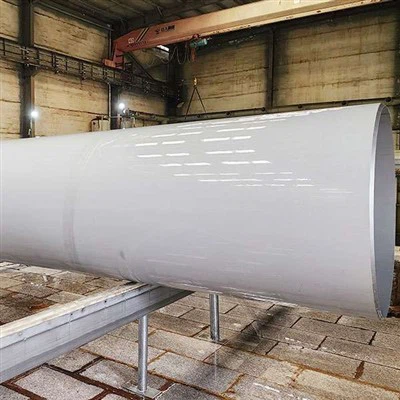
As a supplier of UNS N08904, often referred to as Stainless Steel 904L / UNS N08904 / 1.4539 [/alloys/stainless-steel/stainless-steel-904l-uns-n08904-1-4539.html], I understand the importance of providing comprehensive information about this alloy to our potential customers. While UNS N08904 has numerous advantages, such as excellent corrosion resistance in various aggressive environments, high strength, and good weldability, it is also essential to discuss its disadvantages. This balanced approach allows customers to make informed decisions when selecting materials for their specific applications.
High Cost
One of the most significant disadvantages of using UNS N08904 is its high cost. The alloy contains a relatively high percentage of nickel (23 - 28%), as well as significant amounts of chromium (19 - 23%), molybdenum (4 - 5%), and copper (1 - 2%). These alloying elements are expensive, and their inclusion in UNS N08904 drives up the material cost. Compared to more common stainless steels like Stainless Steel 304L / UNS S30403 / 1.4306, 1.4307 [/alloys/stainless-steel/stainless-steel-304l-uns-s30403-1-4306-1-4307.html], which has a lower content of these costly elements, the price difference can be substantial.
The high cost of UNS N08904 can be a major deterrent for applications where cost is a critical factor. For example, in large - scale construction projects or consumer products, the use of UNS N08904 may not be economically viable. Customers may opt for more affordable alternatives, even if they offer slightly lower performance in terms of corrosion resistance or other properties. This cost factor can limit the market penetration of UNS N08904 and make it less accessible to some industries.
Difficult Machining
UNS N08904 is known for its poor machinability. The alloy's high strength and work - hardening characteristics make it challenging to machine using conventional methods. During machining operations such as turning, milling, or drilling, the material tends to work - harden rapidly, which can lead to increased tool wear, reduced cutting speeds, and lower productivity.
The high nickel and molybdenum content in UNS N08904 contribute to its work - hardening behavior. As the cutting tool engages with the material, the heat generated during the cutting process can cause the alloy to harden, making it more difficult to remove material. This requires the use of specialized cutting tools made from high - speed steel or carbide, which are more expensive. Additionally, lower cutting speeds and feeds are often necessary to prevent excessive tool wear, which further increases the machining time and cost.
In comparison, Stainless Steel 347 / UNS S34700 / 1.4550 [/alloys/stainless-steel/stainless-steel-347-uns-s34700-1-4550.html] generally has better machinability due to its lower alloy content. This makes it a more attractive option for applications that require extensive machining operations.
Susceptibility to Crevice Corrosion
Although UNS N08904 is known for its good overall corrosion resistance, it is still susceptible to crevice corrosion under certain conditions. Crevice corrosion occurs in areas where there is restricted access to the environment, such as under gaskets, in bolted joints, or in the crevices between overlapping metal parts.
In these crevices, the stagnant solution can become depleted of oxygen and enriched with corrosive species, creating a localized environment that is more aggressive than the surrounding medium. The high alloy content of UNS N08904 does not completely prevent the initiation and propagation of crevice corrosion. In environments with high chloride concentrations, such as seawater or some industrial chemical solutions, the risk of crevice corrosion is particularly high.
To mitigate crevice corrosion, special design considerations are required, such as using smooth surfaces, avoiding tight crevices, and applying protective coatings. These additional measures add to the complexity and cost of using UNS N08904 in applications where crevice corrosion is a concern.
Limited High - Temperature Performance
While UNS N08904 has good corrosion resistance at moderate temperatures, its performance at high temperatures is limited. At elevated temperatures, the alloy may experience a decrease in strength and an increase in the rate of oxidation. The high nickel content in UNS N08904 can lead to the formation of nickel - based oxides, which may not provide as effective a protective layer as some other high - temperature alloys.
In applications where high - temperature stability is crucial, such as in heat exchangers, furnaces, or power generation equipment, UNS N08904 may not be the best choice. Other alloys specifically designed for high - temperature applications, such as nickel - chromium - iron alloys or stainless steels with higher chromium and nickel contents, may offer better performance in terms of strength, oxidation resistance, and creep resistance at elevated temperatures.
Weldability Challenges (Despite Being Considered Weldable)
Although UNS N08904 is generally considered weldable, it still presents some challenges during the welding process. The high alloy content in the material can lead to the formation of intermetallic compounds during welding, which can reduce the corrosion resistance and mechanical properties of the welded joint.
For example, the formation of sigma phase, a brittle intermetallic compound, can occur during the welding of UNS N08904. Sigma phase can cause a decrease in toughness and an increase in the susceptibility to corrosion cracking in the welded area. To prevent the formation of sigma phase and other intermetallic compounds, special welding procedures and filler materials are required.
The welding process also needs to be carefully controlled to avoid overheating the material, which can lead to grain growth and a decrease in the overall performance of the welded joint. This requires skilled welders and strict quality control measures, which can add to the cost and complexity of using UNS N08904 in welded structures.


Conclusion
In conclusion, while UNS N08904 offers many advantages in terms of corrosion resistance and mechanical properties, it also has several significant disadvantages. The high cost, difficult machining, susceptibility to crevice corrosion, limited high - temperature performance, and weldability challenges are factors that need to be carefully considered when selecting this alloy for an application.
However, in applications where the superior corrosion resistance of UNS N08904 is essential, such as in the chemical processing industry, the food and beverage industry, or in marine environments, these disadvantages may be outweighed by the benefits. It is important for customers to work closely with material suppliers and engineering experts to evaluate the suitability of UNS N08904 for their specific needs.
If you are considering using UNS N08904 for your project, we encourage you to contact us for a detailed discussion. Our team of experts can provide you with more information about the alloy, its properties, and how it can be used effectively in your application. We can also assist you in comparing UNS N08904 with other materials to help you make the most cost - effective and performance - optimized choice.
References
- ASM Handbook Volume 13A: Corrosion: Fundamentals, Testing, and Protection. ASM International.
- Stainless Steel Design Manual. The Nickel Institute.
- Welding of Stainless Steels and Other Joining Methods. The Welding Institute.