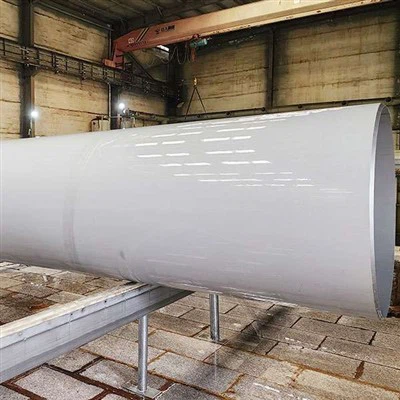
Duplex stainless steels have gained significant popularity in various industries due to their excellent combination of strength and corrosion resistance. Among them, Duplex S32205, also known as Duplex S32205 / F60, stands out as a high - performance alloy. As a supplier of Duplex S32205, I have in - depth knowledge of its properties and how they can be enhanced through the use of additives.
Understanding Duplex S32205
Duplex S32205 is a two - phase alloy composed of approximately equal amounts of ferrite and austenite. This unique microstructure provides it with superior mechanical properties compared to conventional austenitic stainless steels. It has high strength, good ductility, and excellent resistance to stress - corrosion cracking, pitting, and crevice corrosion. These properties make it suitable for a wide range of applications, including oil and gas, chemical processing, and marine environments.
However, in some extreme conditions, there is a need to further enhance the properties of Duplex S32205 to meet specific engineering requirements. This is where the use of additives comes into play.
Additives for Enhancing Corrosion Resistance
Molybdenum (Mo)
Molybdenum is one of the most important additives for enhancing the corrosion resistance of Duplex S32205. It improves the alloy's resistance to pitting and crevice corrosion, especially in chloride - containing environments. Molybdenum forms a stable oxide film on the surface of the alloy, which acts as a barrier against the penetration of corrosive agents. In Duplex S32205, the addition of around 3% - 3.5% molybdenum significantly enhances its performance in marine and chemical processing applications where chloride ions are present.
Nitrogen (N)
Nitrogen is another key additive that can improve the corrosion resistance of Duplex S32205. It enhances the stability of the austenite phase, which in turn improves the alloy's resistance to pitting and crevice corrosion. Nitrogen also increases the strength of the alloy by solid - solution strengthening. In Duplex S32205, the addition of approximately 0.14% - 0.20% nitrogen helps to maintain the balance between ferrite and austenite phases, resulting in improved overall corrosion resistance.
Chromium (Cr)
Chromium is a fundamental element in stainless steels, and its addition to Duplex S32205 is crucial for its corrosion resistance. Chromium forms a passive oxide layer on the surface of the alloy, which protects it from corrosion. By increasing the chromium content, the corrosion resistance of Duplex S32205 can be further enhanced. However, excessive chromium addition may lead to the formation of brittle intermetallic phases, so the chromium content needs to be carefully controlled.
Additives for Improving Mechanical Properties
Nickel (Ni)
Nickel is an important additive for improving the mechanical properties of Duplex S32205. It enhances the toughness and ductility of the alloy by promoting the formation of austenite. Nickel also improves the alloy's resistance to impact loading. In Duplex S32205, the addition of around 4.5% - 6.5% nickel helps to maintain the balance between ferrite and austenite phases, resulting in improved mechanical properties over a wide range of temperatures.
Copper (Cu)
Copper can be added to Duplex S32205 to improve its mechanical properties, especially its resistance to corrosion in reducing environments. Copper forms a protective layer on the surface of the alloy, which enhances its resistance to certain types of corrosion. It also improves the alloy's workability and machinability. The addition of up to 0.8% copper can have a positive effect on the overall performance of Duplex S32205.
Additives for Weldability
Titanium (Ti) and Niobium (Nb)
Titanium and niobium are often added to Duplex S32205 to improve its weldability. These elements react with carbon in the alloy to form carbides, which prevent the formation of chromium carbides at the grain boundaries during welding. Chromium carbide precipitation can lead to sensitization and reduce the corrosion resistance of the alloy. By adding titanium or niobium, the risk of sensitization is minimized, and the weldability of Duplex S32205 is improved.
Comparison with Other Duplex Alloys
When considering the use of additives to enhance the properties of Duplex S32205, it is interesting to compare it with another popular duplex alloy, Duplex S31803 / F51 / 1.4462. Duplex S31803 has a lower alloy content compared to Duplex S32205. While it offers good corrosion resistance and mechanical properties, Duplex S32205, with the appropriate additives, can provide even better performance in more demanding applications.
For example, in terms of corrosion resistance, the higher molybdenum and nitrogen content in Duplex S32205 make it more resistant to pitting and crevice corrosion in chloride - rich environments compared to Duplex S31803. In terms of mechanical properties, the optimized alloy composition of Duplex S32205, including the addition of nickel and other elements, gives it higher strength and toughness.
Conclusion and Call to Action
In conclusion, the properties of Duplex S32205 can be significantly enhanced through the use of various additives. Whether it is improving corrosion resistance, mechanical properties, or weldability, the right combination of additives can make Duplex S32205 an even more suitable choice for a wide range of applications.

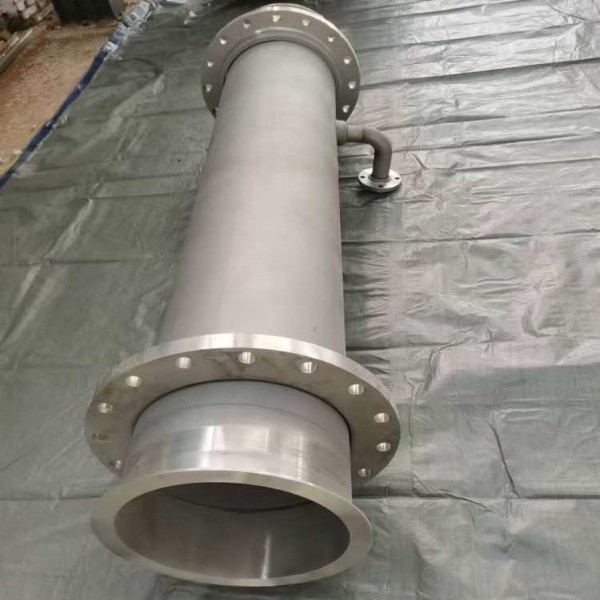
As a supplier of Duplex S32205, I am committed to providing high - quality products with customized alloy compositions to meet your specific needs. If you are interested in learning more about how additives can enhance the properties of Duplex S32205 for your project, or if you are looking to purchase Duplex S32205, please feel free to contact me for further discussions and procurement.
References
- ASM Handbook Volume 3: Alloy Phase Diagrams. ASM International.
- Stainless Steel Handbook. Outokumpu.
- Duplex Stainless Steels: Properties, Applications, and Welding. The Welding Institute.