Nickel is a versatile and widely used metal in various industries, known for its unique properties and ability to enhance the performance of materials. One of the key aspects where nickel plays a significant role is in influencing the thermal conductivity of materials. As a nickel supplier, I have witnessed firsthand how the addition of nickel can transform the thermal characteristics of different alloys, leading to improved efficiency and performance in a wide range of applications.
Understanding Thermal Conductivity
Before delving into how nickel affects thermal conductivity, it's essential to understand what thermal conductivity is. Thermal conductivity is a measure of a material's ability to conduct heat. It is defined as the quantity of heat that passes through a unit area of a material in a unit time when there is a unit temperature gradient across the material. Materials with high thermal conductivity can transfer heat quickly, while those with low thermal conductivity are better insulators.
The Role of Nickel in Thermal Conductivity
Nickel has several properties that make it an important element in influencing the thermal conductivity of materials. Firstly, nickel has a relatively high thermal conductivity itself. Pure nickel has a thermal conductivity of about 90.9 W/(m·K) at room temperature, which is comparable to that of some common metals like aluminum (237 W/(m·K)) and copper (401 W/(m·K)). This means that when nickel is added to a material, it can potentially increase the overall thermal conductivity of the alloy.
Secondly, nickel has a strong affinity for other elements and can form solid solutions and intermetallic compounds with a wide range of metals. These interactions can significantly affect the crystal structure and atomic arrangement of the alloy, which in turn influences its thermal conductivity. For example, when nickel is alloyed with copper, it forms a series of alloys known as cupronickels. These alloys have excellent corrosion resistance and good thermal conductivity, making them suitable for applications in heat exchangers and condensers.
Nickel Alloys and Their Thermal Conductivity
There are several nickel alloys that are widely used in applications where thermal conductivity is important. Let's take a look at some of these alloys and how nickel contributes to their thermal properties.
Alloy 20 / UNS N08020 / 2.4660
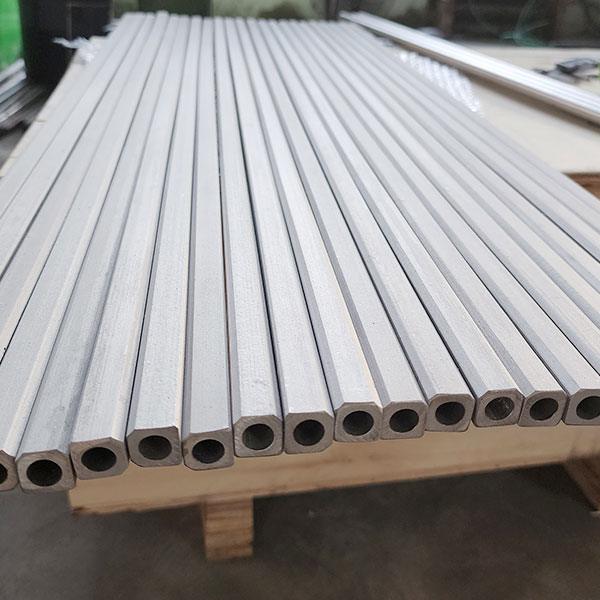
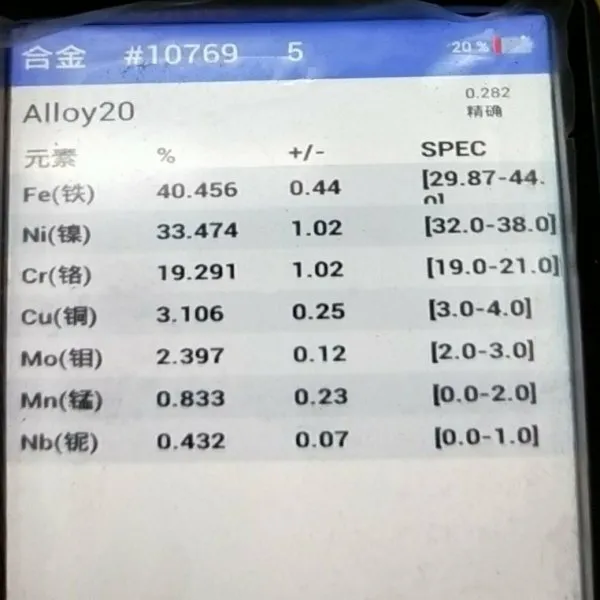
Alloy 20 is a nickel-iron-chromium alloy with additions of copper and molybdenum. It is known for its excellent resistance to corrosion in various environments, especially in sulfuric acid. The addition of nickel in Alloy 20 helps to improve its thermal conductivity, making it suitable for applications in heat exchangers and other equipment where heat transfer is critical. The thermal conductivity of Alloy 20 is around 15.9 W/(m·K) at room temperature, which is relatively high compared to some other corrosion-resistant alloys.
Nickel 201 / UNS N02201 / 2.4061, 2.4608
Nickel 201 is a commercially pure nickel alloy with a minimum nickel content of 99.0%. It has excellent corrosion resistance, high electrical and thermal conductivity, and good mechanical properties. The high purity of Nickel 201 ensures that it has a relatively high thermal conductivity of about 93.7 W/(m·K) at room temperature. This makes it suitable for applications in electrical and electronic components, as well as in heat transfer applications.
Nickel 200 / UNS N02200 / 2.4060, 2.4066
Nickel 200 is another commercially pure nickel alloy similar to Nickel 201, but with a slightly lower carbon content. It has similar properties to Nickel 201, including high thermal conductivity. The thermal conductivity of Nickel 200 is about 90.9 W/(m·K) at room temperature. It is commonly used in applications where high thermal conductivity and corrosion resistance are required, such as in chemical processing equipment and food processing machinery.
Factors Affecting the Thermal Conductivity of Nickel Alloys
While nickel can generally improve the thermal conductivity of materials, there are several factors that can affect the thermal conductivity of nickel alloys. These factors include:
Alloy Composition
The composition of the alloy, including the type and amount of other elements present, can have a significant impact on its thermal conductivity. For example, the addition of elements like chromium, molybdenum, and copper can change the crystal structure and atomic arrangement of the alloy, which in turn affects its thermal conductivity.
Temperature
The thermal conductivity of nickel alloys is also temperature-dependent. In general, the thermal conductivity of most metals decreases with increasing temperature. This is because as the temperature increases, the lattice vibrations in the metal become more intense, which scatters the heat-carrying electrons and reduces their mobility.
Microstructure
The microstructure of the alloy, including the grain size, phase distribution, and presence of defects, can also affect its thermal conductivity. For example, a fine-grained microstructure can increase the scattering of heat-carrying electrons, which can reduce the thermal conductivity of the alloy.
Applications of Nickel Alloys with High Thermal Conductivity
The unique combination of high thermal conductivity and other desirable properties makes nickel alloys suitable for a wide range of applications. Some of the common applications include:
Heat Exchangers
Heat exchangers are devices used to transfer heat between two fluids. Nickel alloys with high thermal conductivity, such as Alloy 20 and Nickel 200, are commonly used in heat exchangers to improve the efficiency of heat transfer. These alloys can withstand high temperatures and corrosive environments, making them ideal for use in chemical processing plants, power generation facilities, and HVAC systems.
Electrical and Electronic Components
Nickel alloys with high thermal conductivity, such as Nickel 201, are used in electrical and electronic components to dissipate heat. These alloys can help to prevent overheating of components, which can improve their reliability and performance. They are commonly used in applications such as computer chips, power transistors, and battery packs.
Chemical Processing Equipment
In the chemical processing industry, nickel alloys are used in equipment such as reactors, condensers, and piping systems. The high thermal conductivity of these alloys allows for efficient heat transfer during chemical reactions, while their corrosion resistance ensures long-term durability in harsh chemical environments.
Conclusion
In conclusion, nickel plays a crucial role in influencing the thermal conductivity of materials. Its high thermal conductivity and ability to form alloys with other elements make it a valuable addition to various materials, leading to improved thermal performance in a wide range of applications. As a nickel supplier, I am committed to providing high-quality nickel alloys that meet the specific requirements of our customers. Whether you are looking for an alloy with high thermal conductivity for a heat exchanger or a corrosion-resistant alloy for a chemical processing application, we have the expertise and resources to help you find the right solution.
If you are interested in learning more about our nickel alloys or would like to discuss your specific requirements, please feel free to contact us. We look forward to working with you to meet your needs and provide you with the best possible products and services.
References
- ASM Handbook, Volume 2: Properties and Selection: Nonferrous Alloys and Special-Purpose Materials, ASM International, 1990.
- Metals Handbook, Desk Edition, Second Edition, ASM International, 1998.
- "Thermal Conductivity of Metals and Alloys," Handbook of Thermal Conductivity of Solids, Edited by Robert W. Powell, Paul E. Liley, and Philip K. Cheung, Plenum Press, 1986.