Product Introduction
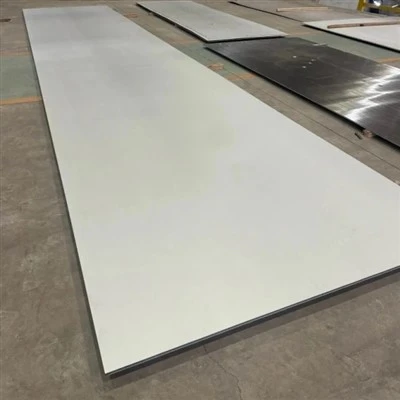
High-Temperature Alloy Steel Plates are engineered for structural stability, pressure containment, and thermal endurance in elevated-temperature services. This premium alloy series is optimized for industrial boilers, pressure vessels, heat exchangers, furnace components, and process equipment exposed to continuous thermal loading.
Compared to standard carbon steel, this specialized product range delivers superior high-temperature strength retention, excellent oxidation resistance, robust creep deformation resistance, and reliable weldability under demanding fabrication environments.
Technical Specifications
|
Item |
Technical Specification |
|
Product Form |
Hot Rolled Plate, Sheet, Cut-to-Size Blanks |
|
Thickness |
3 mm – 120 mm |
|
Width |
1000 mm – 3500 mm |
|
Length |
2000 mm – 12000 mm |
|
Supply Condition |
Normalized (N), Normalized & Tempered (N+T), Quenched & Tempered (Q+T), Annealed (A) |
|
Surface Finish |
Mill Finish, Shot Blasted (Sa 2.5), Pickled, Anti-Rust Primed |
|
Processing Services |
CNC Flame / Plasma / Waterjet Cutting, Edge Beveling |
|
Documentation |
EN 10204 3.1 / 3.2 MTC, Dimensional Reports, Heat Treatment Curves |
Available Grades & Standards
|
ASTM / ASME A387 / SA387 |
Grade 5, Grade 9, Grade 11 (Class 1 & 2), Grade 12, Grade 22, Grade 91. |
|
Compliance Certification |
ASTM A387 / ASME SA387 (Pressure Vessel Plates, Alloy Steel, Chromium-Molybdenum), EN 10028-2, DIN, and JIS. |
Key Performance Advantages
Stable Elevated-Temperature Strength: Prevents structural softening and maintains mechanical load capacity in hot process environments.
Enhanced Oxidation Resistance: Chromium alloying forms a protective passive layer to resist scaling in hot gas and furnace atmospheres.
Creep Rupture Resistance: Molybdenum additions ensure precise dimensional stability under long-term, sustained high-temperature loads.
Microalloyed Stability: The precise balance of Chromium (Cr) and Molybdenum (Mo) prevents carbide graphitization at temperatures exceeding 450°C.
Thermal Fatigue Tolerance: Refined grain structures accommodate continuous thermal expansion and contraction cycles without micro-cracking.
Typical Applications
Power Generation
Boiler drums, steam headers, superheater components, and reheater fabrications.
Petrochemical & Refining
Hydrocracking reactors, catalytic reformers, separators, and high-temperature process piping systems.
Thermal Processing
Furnace casings, industrial heat exchangers, hot gas ducting, and waste heat recovery units.
Value-Added Custom Processing
To support immediate workshop fabrication and structural integration, comprehensive pre-processing services are available to minimize workshop fabrication time and material waste:
Precision Profiling: CNC flame, plasma, and waterjet cutting executed directly from engineering drawings or nesting files.
Weld Preparation: Custom edge beveling (including V, X, and U-groove configurations) for direct pressure vessel longitudinal and circumferential welding.
Flexible Supply Scope: Full support for low-volume maintenance replacement components up to bulk materials for global infrastructure projects.
Quality Control & Certifications
Quality assurance protocols verify adherence to global pressure equipment directives through rigorous inspection phases:
Material Verification: Positive Material Identification (PMI) and optical emission spectrometry chemical analysis.
Mechanical & NDT Testing: Room-temperature and elevated-temperature tensile testing, Charpy V-Notch impact testing, and Ultrasonic Testing (UT) compliant with ASTM A435/A578.
Traceability Assurance: Permanent hard-stamping of heat numbers, batch codes, and complete material certification alignment.
System Compliance: Frameworks conforming to ISO 9001, PED 2014/68/EU, and major international classification society standards.
Packaging & Shipping Logistics
Plates are packed securely to withstand international logistics stress, preserving surface quality and edge integrity:
Heavy-duty steel banding with edge protectors to prevent mechanical friction marks.
Moisture-resistant synthetic wrapping to shield steel surfaces during ocean freight.
Clear shipping marks denoting heat numbers, dimensions, material grade, and tracking codes for efficient port and customs clearing.
Optimized loading configurations for standard containerized or break-bulk ocean vessels.
Frequently Asked Questions
Q: Which alloy grades are standard for high-pressure boiler components?
A: ASTM/ASME A387 Grade 11 and Grade 22 are standard for moderate-to-high temperature boilers, while Grade 91 is selected for supercritical and ultra-supercritical parameters due to its superior creep resistance.
Q: Is customized weld beveling available prior to shipment?
A: Yes. We perform precise edge beveling, drilling, and custom profile cutting based on client blueprints to ensure components arrive ready for direct workshop assembly.
Q: How is the material protected against corrosion during transit?
A: Plates undergo commercial shot blasting and are treated with a specialized rust-preventative primer, complemented by waterproof heavy-duty packaging to resist marine atmospheres.
Q: Are third-party inspections accepted for project validation?
A: Yes. Independent international inspection agencies are welcome to witness production, perform dimensional verification, review ultrasonic mapping, and audit quality documentation.
Hot Tags: high-temperature alloy steel plate, China high-temperature alloy steel plate manufacturers, suppliers