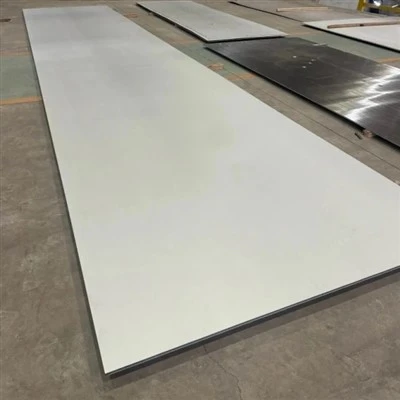
Product Overview
Pressure Vessel Alloy Steel Plate is manufactured specifically for premium equipment operating under intense internal pressure, severe thermal cycling, and sustained high-temperature conditions. Produced with stringent metallurgical control over chemical composition, mechanical properties, and internal soundness, these plates perfectly satisfy the rigorous construction codes of international pressure equipment.
Featuring specialized chromium-molybdenum alloy compositions and low-alloy carbon grades, this series ensures dependable weldability, through-thickness tensile consistency, and full mill heat traceability. It is the premier choice for global fabricators producing certified boilers, steam drums, reactors, and process columns.
Material Grades Available
ASTM / ASME Series
A387 / SA387 (Grade 5, Grade 9, Grade 11, Grade 12, Grade 22, Grade 91)
EN 10028 Series
P265GH, P355GH, 16Mo3, 13CrMo4-5, 10CrMo9-10
Project Specifics
Additional pressure vessel quality grades supplied to custom project requirements.
Manufacturing Standards
|
Standard Organization |
Applicable Compliance Codes |
|
ASTM / ASME |
ASTM A20, ASTM A387, ASME Sec II Part A |
|
EN / DIN |
EN 10028-2, EN 10028-3, DIN 17155 |
|
GB |
GB 713, GB 3531 |
Technical Specifications
|
Item |
Technical Specification Details |
|
Product Name |
Pressure Vessel Alloy Steel Plate / PVQ Plate |
|
Thickness |
6 mm – 150 mm |
|
Width |
1,500 mm – 4,000 mm |
|
Length |
3,000 mm – 18,000 mm |
|
Delivery Condition |
As Rolled, Normalized, Quenched & Tempered, Simulated PWHT |
|
Surface Condition |
Shot Blasted, Primer Coated, Mill Finish |
|
Edge Condition |
Trimmed Edge, Cut Edge, Mill Edge |
|
Documentation |
EN 10204 3.1 / 3.2 MTC, Heat Number Traceability, NDT Reports |
Key Performance Advantages
Excellent Thermal Stability & Creep Resistance: The integrated Chromium-Molybdenum matrix maintains high yield strength and resists oxidation during long-term exposure to elevated temperatures.
Optimized Weldability & Fabricability: Controlled carbon equivalent values ensure predictable welding performance and simplify vessel shell rolling procedures in the workshop.
Homogeneous Internal Soundness: Uniform microstructure guarantees excellent impact toughness and isotropic mechanical properties across the entire cross-section of the plate.
Typical Applications
Oil & Gas Refining
Hydroprocessing reactors, desulfurization separators, and heavy-wall distillation columns.
Power Generation
Superheater headers, high-pressure steam drums, utility boilers, and economizers.
Chemical Processing
Industrial shell-and-tube heat exchangers, storage spheres, and high-pressure piping components.
Quality Control, Testing & Certifications
To verify absolute reliability under high-stress operating environments, every manufacturing heat undergoes testing:
Mechanical Verification: Product chemical analysis, room temperature tensile tests, and elevated temperature tensile testing.
Impact & Hardness Testing: Charpy V-notch impact testing at specified temperatures and Brinell/Rockwell hardness mapping.
Non-Destructive Testing (NDT): 100% Ultrasonic Testing conforming to ASTM A435, ASTM A578, or EN 10160 to verify zero internal laminations.
System Compliance: Manufactured under premium global standards including ISO 9001, CE, PED (Pressure Equipment Directive), and international marine classification rules.
Custom Manufacturing Service
Tailored Dimensions: Non-standard thicknesses, extra-wide plate configurations, and optimized lengths to maximize material yield.
Pre-Fabrication Processing: Precision CNC flame or plasma cutting-to-size based on engineering drawings, edge beveling, and permanent plate marking.
Advanced Testing Protocols: Supplemental options including Hydrogen-Induced Cracking testing, Sulfide Stress Cracking resistance, and step-cooling tests.
Packaging & Shipping
Surface Protection: Heavy-duty steel strapping, edge corner guards, and marine-grade anti-rust coatings.
Secure Logistics Fixing: Structural wooden blocking, steel dunnage, and dedicated pallet supports for heavy-gauge shipments.
Traceability Markings: Hard-stamped heat numbers, batch codes, and weather-proof identification tags matching the Mill Test Certificate.
Flexible Shipping Methods: Containerized loading for standard dimensions or break-bulk shipping arrangements for oversized plates.
FAQ
Q: How does pressure vessel alloy plate differ from standard structural steel?
A: Pressure vessel plates utilize cleaner steel-making chemistry with lower sulfur and phosphorus limits. They require mandatory internal soundness testing and specific heat treatments to handle pressure containment securely.
Q: Which alloy steel grades are ideal for high-temperature service?
A: ASTM A387 / ASME SA387 Grade 11, Grade 22, and Grade 91 are widely selected due to their high chromium and molybdenum content, which provides superior resistance to creep and thermal degradation.
Q: Can these plates be supplied with normalized treatment and Ultrasonic Testing?
A: Yes. Plates are routinely supplied in Normalized or Quenched & Tempered conditions, fully verified by Ultrasonic Testing according to your exact project specifications.
Q: Do you provide custom cutting and edge preparation services?
A: Yes. We supply custom cut-to-size plates based on fabrication drawings and offer edge profiling or beveling to streamline your workshop welding preparation.
Q: What documentation is provided with the material?
A: Every shipment is accompanied by a comprehensive documentation package, including EN 10204 3.1 or 3.2 Mill Test Certificates, heat traceability records, chemical analysis, and NDT reports.
Q: Which global industries frequently utilize these alloy plates?
A: These plates are universally specified by procurement teams in petrochemical refining, industrial boiler manufacturing, thermal power plant construction, and high-pressure equipment engineering.
Hot Tags: pressure vessel alloy steel plate, China pressure vessel alloy steel plate manufacturers, suppliers